

Located along Lesotho’s border with South Africa, Maseru Bridge Border Post in the west and Ficksburg Bridge Border Post in the north play a pivotal role in facilitating cross-border trade between the two countries. The two border posts handle the highest volumes of cargo, passenger, and vehicle movements among Lesotho’s five commercial border posts and contribute approximately 80% of the country’s import tax revenue.
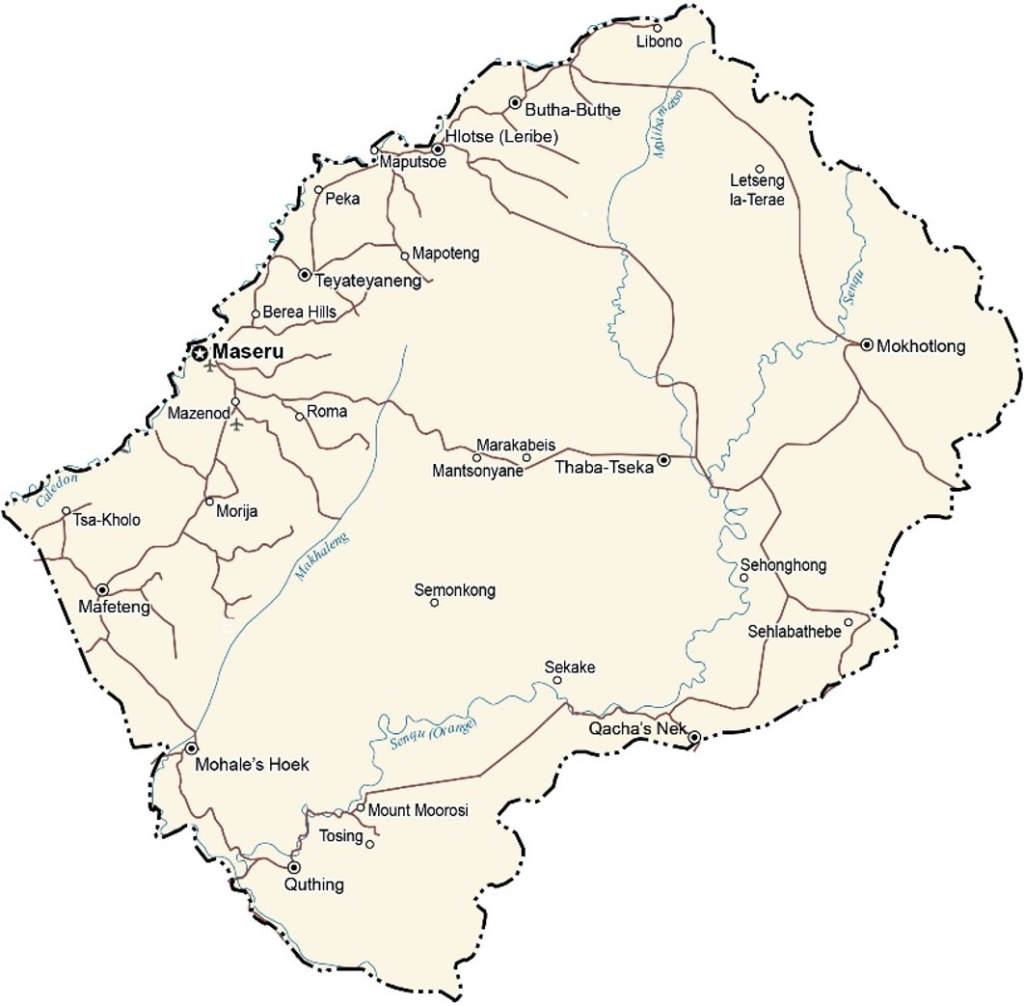 With traffic congestion causing significant delays at these border posts, the two countries have been working on a Joint Action Plan on border modernization to transform them into One-Stop Border Posts (OSBPs) – specialized border crossings integrating multiple border control agencies from two border countries (e.g. Customs, immigration, and quarantine) into a single coordinated facility. In this context, the South African Revenue Service (SARS) and the Revenue Services Lesotho (RSL) decided in 2025 to jointly conduct a WCO Time Release Study (TRS).
By enabling them to identify operational delays, procedural bottlenecks, and inefficiencies affecting the cross-border movement of goods, the TRS was used as a diagnostic tool to assess the operational readiness, institutional coordination, and process integration necessary to support the successful implementation of the OSBP concept.
Set up
Both SARS and the RSL had already conducted a TRS in the past. SARS had even conducted a joint TRS with Eswatini (see WCO News 104 edition). However, the RSL had relied on technical guidance and support from an external consultant for its previous TRS in 2022 and had focused primarily on Customs clearance processes.
With this joint study, the two countries were to assess the time required for trucks to go through pre-border and at-border processes, at import and export. The RSL and the other agencies involved opted to build the internal institutional capacity and technical competency that would enable them to independently conduct TRS exercises at regular intervals and across multiple border posts.
In both countries, a Technical Working Group, comprising border officials and clearing agents from the trading community, was set up. The Working Groups each had a dedicated TRS Project Lead, coordinating operations, sustaining communication, and ensuring timely progress throughout the study.
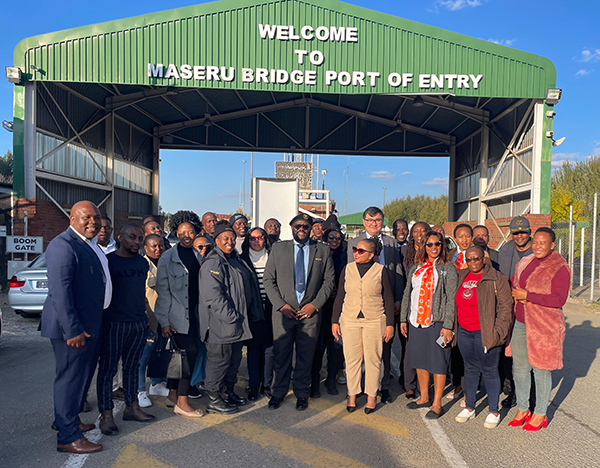
The Lesotho Technical TRS Working Group was formed within the National Trade Facilitation Committee (NTFC), with permanent and ad hoc members from the RSL, other government agencies (OGAs), and other border stakeholders. Support in strengthening technical understanding of the methodology was provided by the WCO through the WCO Accelerate Trade Facilitation Programme, an initiative funded by His Majesty’s Revenue and Customs (HMRC) of the United Kingdom, with which the RSL had been working since 2018. Activities included remote coaching sessions, in-country workshops, and a test run before the data collection phase started, which enabled participants not only to prepare, but also to establish confidence in the process.
Conducting the joint TRS required close coordination and collaboration between the RSL and SARS. The two administrations worked together to harmonize methodologies, and developed comprehensive process maps for import and export procedures. These covered both pre-border activities, such as declarations, Clearing Agent assessment notices, payments, and issuance of the “proceed-to-border” (P2B), as well as at-border activities, including arrival, inspections, OGA interactions, toll payments, and exit. They also agreed on questionnaires, sampling approaches, and data definitions to ensure consistency and comparability across both border posts.
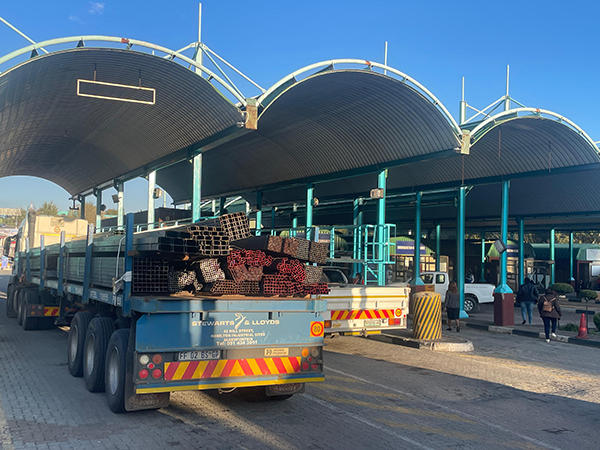
The two Technical TRS Working Groups together visited the Maseru Bridge and Ficksburg Bridge to validate clearance processes, confirm timestamp capture points, and align operational procedures across agencies. In addition, they reviewed truck routing, inspection areas, OGA service points, payment facilities, and exit procedures, while also testing field tools and preparing frontline officers, traders, and clearing agents for data collection.
Methodology
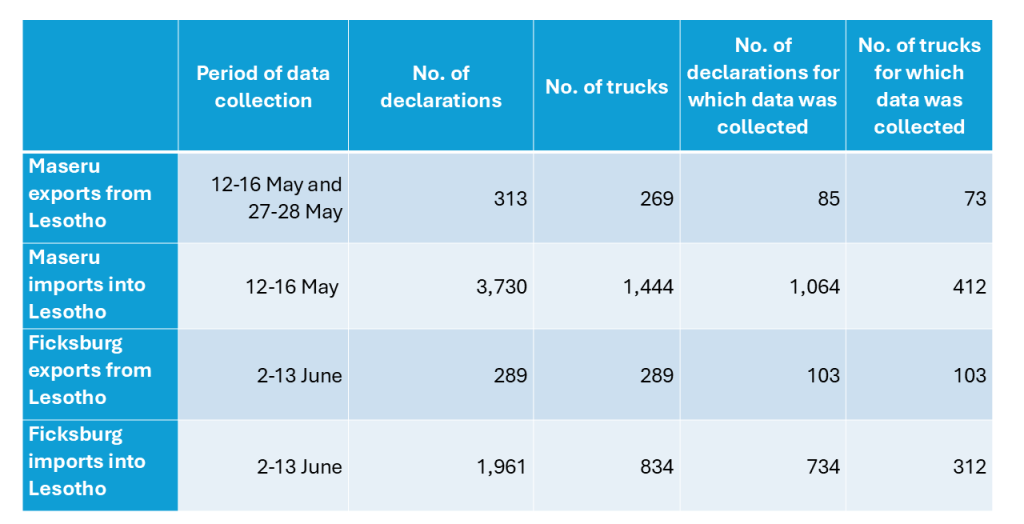
The methodology combined statistical analysis with the integration of manually collected field data and electronic timestamps from the Customs automated systems. Data collection was conducted at Maseru Bridge from 12 to 16 May 2025, with additional export data collected on 27 and 28 May, while fieldwork at Ficksburg Bridge took place between 29 May and 6 June 2025. A pilot exercise was first conducted to test the tools, train enumerators, and refine data-handling procedures before full implementation. Sampling was carried out across morning, midday, and afternoon shifts to capture operational variations throughout the day.
During implementation, baseline data revealed significant differences in declaration volumes between the two border posts, with Maseru Bridge handling higher traffic volumes. Export samples proved more difficult to obtain due to lower declaration volumes, leading the team to shift from declarations to truck manifests as the primary sampling unit to improve representativeness. Sampling targets were subsequently adjusted to 150 import trucks or manifests and 70 export trucks or manifests at each border post on the Lesotho side.
The final dataset comprised 412 import and 73 export records at Maseru Bridge, and 325 import and 109 export records at Ficksburg Bridge. Manual timestamps, including truck registration numbers, arrival times and exit times, were exchanged between Lesotho and South Africa and merged with the Customs computer systems data through unique identifiers to create a harmonized end-to-end dataset. All records were standardized into a uniform date and time format, while quality assurance checks were conducted to identify outliers, duplicates, and missing records. Any inconsistencies were verified directly with enumerators.
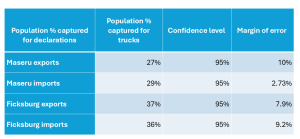
The reliability of the dataset was assessed using population coverage and margins of error at a 95% confidence level. Maseru Bridge imports demonstrated a strong reliability level with a low margin of error of 2.73%, while Ficksburg Bridge imports and exports remained within acceptable reliability thresholds. Maseru Bridge export data, although statistically valid, recorded a higher margin of error of 10%, indicating that findings for this category should be interpreted with slightly greater caution.
The analysis produced average and median clearance times, disaggregated by border post, trade flow, and risk-management lane (Green, Yellow, Red, and Blue). Comparative analysis was then used to identify operational bottlenecks, coordination gaps, documentation requirements, and delays linked to OGA interventions and payment processes.
Key findings
The TRS revealed significant operational and coordination challenges at the Maseru Bridge Border Post and Ficksburg Border Post. Border processes remain fragmented due to limited inter-agency coordination, lack of data sharing, inconsistent standard operating procedures (SOPs), and silo-based inspections, all of which contribute to congestion, duplication of checks, and prolonged clearance times. Heavy reliance on manual procedures, misaligned risk management systems, inconsistent immigration and health controls, and continued dependence on cash-based payments further reduce efficiency and increase compliance risks.
At Maseru Bridge, the absence of differentiated services for Authorized Economic Operators (AEOs), perishable goods, and priority consignments limits trade facilitation and delays processing. At Ficksburg Bridge, poorly sequenced procedures, shared infrastructure for trucks and passenger vehicles, and the lack of sanitary and phytosanitary (SPS) services on the South African side contribute to congestion and disruptions for agricultural exports. Overall, the findings highlighted the need for harmonized procedures, automation, joint inspections, integrated risk management, improved infrastructure, and enhanced coordinated border management to streamline trade and improve border efficiency between Lesotho and South Africa.
Advancing the OSBP project
In June 2025, South Africa and Lesotho signed a Joint Action Plan on joint border modernization. Four Joint Technical Working Groups, addressing, respectively, business processes, legal affairs, AEO, and intelligence and risk management, are supervising its implementation. The Plan includes creating Smart One-Stop Border Posts (OSBPs) at the Maseru Bridge Border Post and Ficksburg Border Post. It also provides for bilateral CBM process mapping, joint immigration and cargo controls, integrated risk management, enhanced cargo tracking systems, implementation of a Customs single declaration system, and expansion of the SACU AEO Mutual Recognition Agreement.
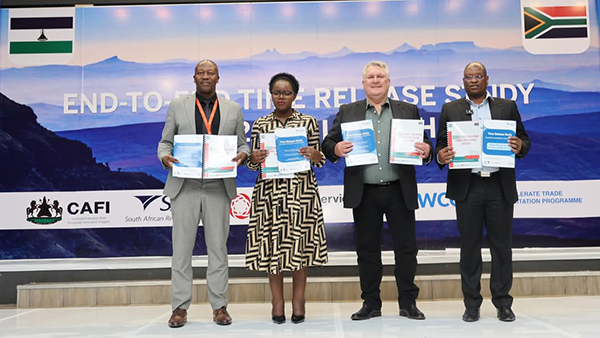
The joint TRS has been instrumental in informing the Plan and laying the foundation for the implementation of the OSBPs and the broader CBM agenda between the two countries. The key findings from the Time Release Study reports for Lesotho and South Africa were presented at a public launch in November 2025, where both countries signed a joint declaration of acceptance as a demonstration of their shared commitment. Following this, the two countries developed a monitoring matrix to track ongoing progress in implementing the TRS recommendations.
Lessons learned
The study generated several important strategic observations and lessons learned.
First, strong stakeholder participation and collaboration is a critical success factor. Using the NTFC framework, the RSL was able to secure buy-in from OGAs, clearing agents and the private sector, promoting shared ownership of the study. A launch event with high-level representatives from the two countries was organized to increase visibility, accountability, and momentum among stakeholders, indicating the high degree of commitment from both Lesotho’s and South Africa’s leadership.
Second, resource planning must be done carefully. One of the key challenges of the joint TRS was the extensive coordination required across technical, operational, and financial dimensions. Resource planning was not fully scoped at the outset, and participation among some border agencies was uneven. This highlighted the importance of early stakeholder mapping and the need to clearly define roles, responsibilities, and resource commitments from the beginning of the exercise. Future TRS studies would benefit from a consolidated resource plan aligned with the operational calendars of all participating agencies.
Third, digital data collection tools and built-in validation mechanisms should be prioritized to improve data accuracy, streamline verification processes, and reduce reconciliation time. Manual data entry and questionnaire-based recording resulted in inconsistencies, missing timestamps, and significant data-cleaning requirements.
Fourth, continued engagement among stakeholders during data cleansing, analysis, and report drafting requires regular coordination and follow-up. Maintaining momentum after the data collection phase proved to be another challenge. Weekly and bi-weekly virtual support sessions with WCO experts, together with ongoing RSL-SARS technical meetings, were instrumental in sustaining progress, resolving technical issues, and advancing the analysis and report preparation in a structured manner.
Finally, the study further demonstrated that a TRS does not necessarily require excessive financial resources once institutional capacity has been established. However, some implementation costs related to logistics, meals, workshops, coordination activities, and technical support were initially underestimated, creating financial pressure during execution. In the case of Lesotho, the primary costs were associated with officer time, field allowances during site visits and data collection, stakeholder consultations, and launch events. A key lesson learned is that future TRS planning should include more comprehensive budget forecasting, contingency provisions, and early engagement with development partners where supplementary support may be required.
More information
Contact the RSL
WCO Accelerate Trade Facilitation Programme / Contact the Programme