
In both cases, public- and private-sector participants brought different perspectives and expertise to the same trade processes, working together to identify opportunities for improvement and develop solutions by consensus. The events in August 2026 at the Jama Pass between Argentina and Chile, where hundreds of trucks were redirected following the closure of other border points due to heavy snow, reveal the other side of that interdependence: what can happen when mechanisms for coordination are not already in place.
The conclusion is becoming difficult to ignore: public-private collaboration should no longer be treated as an occasional consultation mechanism, but as a permanent component of trade governance.
Seeing the trading system together
A border functions as a single system, but each participant experiences only part of it. Customs focuses on procedures, compliance and risk. Sanitary authorities are concerned with the requirements needed to protect health. Migration authorities focus on the movement of people, while transport authorities deal with vehicles and infrastructure. For a trucking company, the border is one stage in the journey from origin to destination; for an exporter, what matters is whether the goods reach the customer on time.
None of these perspectives is wrong. None, however, is complete.
This is why bringing the different actors together can produce results that are difficult to achieve when institutions and businesses examine problems separately. What one participant experiences as an inexplicable delay may have a perfectly understandable regulatory reason. Conversely, a requirement that appears straightforward from inside an agency may create duplication or an unintended bottleneck when combined with requirements imposed elsewhere in the process.
Two major initiatives illustrate the scale and value of bringing these perspectives together.
First is the coordinated Border Management work in MERCOSUR, the regional integration process initially established by Argentina, Brazil, Paraguay and Uruguay, and subsequently joined by Venezuela (currently suspended) and Bolivia (whose accession procedure is still under way). This work mobilized 545 private-sector representatives and 242 public-sector participants across 10 border crossings involving Argentina, Brazil, Paraguay and Uruguay. Through 52 meetings, participants jointly examined border processes, identifying 274 opportunities for improvement and developing 347 proposed actions.
The subsequent work on the Capricorn Bioceanic Corridor, which connects the Atlantic port of Santos in Brazil with the Pacific ports of Antofagasta and Iquique in Chile, applied the same collaborative principle across Argentina, Brazil, Chile and Paraguay. It engaged 469 private-sector representatives from 282 companies and 43 business associations, together with 161 representatives from 65 public agencies and academic or educational institutions. Through 19 virtual and 10 in-person meetings, the process identified 231 opportunities for improvement and produced 264 consensus-based actions.
The significance of these numbers lies less in the size of the projects than in what the mobilization made possible. Companies, carriers, Customs brokers and associations brought operational knowledge about how procedures interact in practice. Public authorities brought knowledge of the objectives, risks and legal constraints behind those procedures. Instead of one side presenting demands to the other, participants could reconstruct the end-to-end process together, understand why problems occurred and determine which solutions were both operationally useful and institutionally feasible.
That distinction is important. Public-private collaboration is not simply consultation. It is a mechanism for combining knowledge that is otherwise fragmented across the trading system.
And not every improvement identified through this process required a new bridge, a multimillion-dollar information system or lengthy regulatory reform. Some of the most revealing results were the quick wins: operational problems for which progress became possible simply because the people responsible for different parts of the process were brought together, compared what each was doing and understood how their decisions affected others.
One of the clearest examples emerged at the Chuí-Chuy border between Brazil and Uruguay. During the project, in-person working sessions brought Customs authorities and private-sector operators together at the border, allowing participants to observe the process jointly and discuss operational constraints directly. This dialogue helped accelerate a long-standing bilateral discussion and contributed to the implementation of a single control facility on the Brazilian side for Customs procedures carried out by both countries. The change illustrates how bringing the responsible actors together around the actual operation can turn an identified bottleneck into a practical solution, even while broader challenges, such as harmonizing operating hours, infrastructure, migration controls and weighing procedures, remain to be addressed.
A second example came from the Gualeguaychú-Fray Bentos border between Argentina and Uruguay, where the project identified the duplication of non-intrusive cargo inspections as an important source of unnecessary delay. Customs authorities subsequently reached an agreement to share scanner images and related information, enabling both administrations to use the same inspection data rather than automatically repeating the process on each side of the border. Beyond reducing duplication, the arrangement demonstrates how information sharing can strengthen both control and facilitation: the authorities retain their respective oversight responsibilities while gaining access to information already produced by their counterpart.
In Paraguay, the collaborative process also helped bring visibility to port charges imposed by the National Navigation and Ports Administration (ANNP) that private-sector participants identified as a significant competitiveness issue. The Government of Paraguay subsequently eliminated these charges through Presidential Decree No. 2043, which repealed Decree No. 1306/2003. The measure removed an estimated USD 18 million in annual costs previously borne by importers and exporters, while also eliminating associated administrative procedures at the border. Although the change required a government decision, the identification and prioritization of the problem through public-private dialogue illustrates another function of structured collaboration: enabling operational constraints experienced by businesses to be examined together with the authorities capable of addressing them.
These examples matter because they expose a hidden cost of institutional fragmentation. Sometimes the obstacle to trade is not a lack of resources or even an inadequate regulation. It is that one actor does not know what another actor needs, sees or is able to do.
A meeting cannot build a bridge. But it can reveal that two agencies are requesting the same information, that operating practices on opposite sides of a border are unnecessarily misaligned, that a private operator has misunderstood the purpose of a requirement, or that an authority is unaware of the operational consequences created by the way a rule is being implemented. In such cases, communication itself can become an instrument of trade facilitation.
This does not mean that all border problems are easy to solve. The two projects identified issues involving infrastructure, technology, regulations, procedures and human resources, with solutions requiring action at national, bilateral and multilateral levels. Many will require sustained political commitment and investment.
But the collaborative process provides something essential even for those harder problems: a shared diagnosis and a solution that the relevant actors have helped construct. That is fundamentally different from each institution optimizing its own piece of the process independently. It means beginning with the performance of the trading system as a whole.
And it suggests an important question: if structured collaboration can help actors understand and resolve operational problems under normal conditions, what happens when the system suddenly faces conditions for which normal procedures were never designed? The experience at Jama provides an answer.
Jama: when inefficiency becomes an emergency
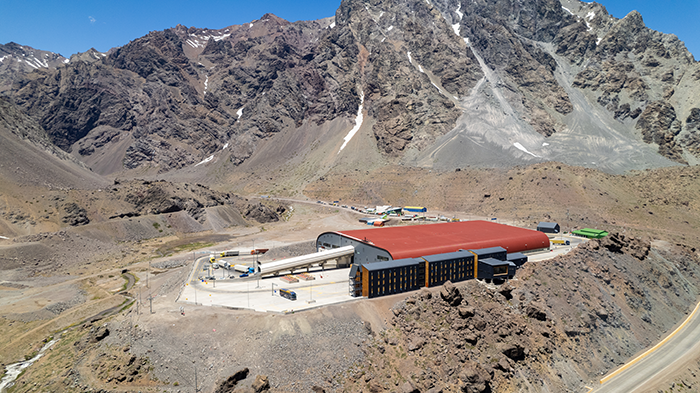
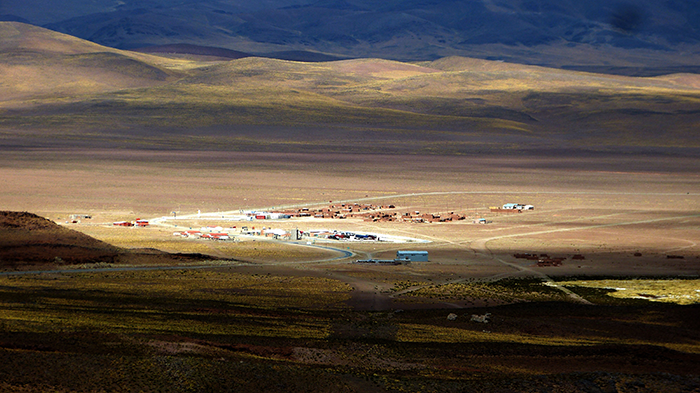
Recent events at the Jama Pass between Argentina and Chile illustrate why established mechanisms for collaboration matter. For almost two weeks between late July and early August 2026, heavy snowfall closed the Los Libertadores crossing between Argentina and Chile, redirecting cargo northwards towards high-altitude crossings such as Jama, at more than 4,000 metres above sea level. Hundreds of trucks were stranded there, many carrying refrigerated and frozen meat, poultry, fish and fruit. Tracking information from one carrier showed average delays exceeding 75 hours, with individual cases exceeding 10 days. According to operator reports brought to Procomex, at least two drivers died during the most critical period and others required hospitalization.
Extreme weather caused the closure, but weather alone did not explain why vehicles remained stranded for so long. When trucks were redirected to another border crossing, the required documents could not simply move with them. Changing transport documentation, for example, could affect freight calculations and CIF values, creating discrepancies elsewhere in the process. For food cargo, sanitary certificates associated with the original crossing might first have to be cancelled and then reissued for the new one, with each procedure taking an average of three working days. Other documents and authorizations could add further delays. Requirements that were manageable under normal conditions became much harder to navigate when the usual flow of traffic was disrupted.

The situation at Jama illustrates a central principle of coordinated border management: each link can perform its individual function correctly while the chain as a whole fails. Authorities could apply their respective rules as intended, yet the combined effect was a breakdown in the overall flow. Trucks were physically present at the border but remained administratively unaccounted for because their declarations had been rejected or had not yet been issued, leaving them outside the shared operational picture.
The problem, therefore, was not necessarily the failure of any single institution. It was the absence of a mechanism capable of maintaining visibility over and shared responsibility for the end-to-end flow.
Then something important happened.
In the absence of such a mechanism, private-sector actors, including Customs brokers, legal representatives, transport companies and operators, began mobilizing their contacts and connecting different parts of the logistics chain. Dialogue with public authorities eventually helped move trucks that had been stranded for days to an area where conditions were more suitable and the necessary controls could be performed.
This collaboration helped address the immediate crisis, but it also exposed a deeper weakness. The response depended on ad-hoc mobilization, goodwill and personal relationships after the situation had already become critical.
The lesson, then, is not that informal collaboration is enough. It is that collaboration needs to be institutionalized. Goodwill is not a system, and personal networks are not public policy.
From collaboration by necessity to collaboration by design
Jama makes clear why collaboration cannot depend on relationships assembled only after a disruption has occurred. For international trade corridors and major border crossings, public-private coordination needs to be part of contingency planning itself.
The MERCOSUR and Bioceanic Corridor exercises show that bringing public authorities and private-sector operators together can generate a shared understanding of how trade processes function and where they break down. In an emergency, that same capacity becomes even more consequential: decisions must be made quickly, across institutions and borders, with incomplete information and under conditions that normal procedures were not designed to address.
Governments and the private sector should not exchange business cards for the first time during a snowstorm, flood, landslide, system failure or other emergency. The relationships, responsibilities and communication channels needed to respond should already be in place.
Contingency mechanisms should therefore identify public- and private-sector focal points in advance, establish communication and escalation channels, provide real-time visibility over vehicles, drivers and cargo, and define procedures for rerouting shipments. They should also establish how transport, Customs and sanitary documents can be rapidly corrected or revalidated when a designated border crossing changes, and which requirements can be addressed retrospectively without compromising control.
What matters is the capacity to coordinate the end-to-end flow rather than leaving each institution to respond only within the boundaries of its own mandate. During a disruption, time cannot be lost determining which agency is responsible, locating the appropriate private-sector contact or reconstructing the situation from fragmented information. A functioning contingency mechanism should make it possible to see where vehicles and cargo are in the process, identify what is preventing them from moving and coordinate the actors capable of resolving those constraints.
Such mechanisms do not require the weakening of Customs, sanitary or security controls. On the contrary, the experience at Jama shows why facilitation and control must be designed together. Exceptional circumstances require procedures that preserve the objectives of those controls while allowing authorities and operators to adapt how they are applied. The objective is not to control less, but to ensure that the trading system can continue to function safely and effectively when normal operating conditions no longer apply.
Collaboration must become part of the architecture of trade
The broader lesson extends beyond emergency preparedness. The MERCOSUR and Bioceanic Corridor exercises, the operational improvements that emerged from them and the experience at Jama all point to the value of treating public-private collaboration as a permanent component of trade governance rather than as an occasional consultation mechanism.
This means involving public authorities and private-sector operators throughout the development and management of the trading system: when regulations are designed, processes are reviewed, digital systems are developed, infrastructure is planned, performance is measured and contingency plans are prepared. Doing so requires permanent mechanisms with clear public- and private-sector representation, designated focal points, measurable action plans and regular follow-up. For strategic corridors, these arrangements should extend across borders through contingency protocols that can be activated when normal operating conditions break down.
The purpose is not simply to create more opportunities for dialogue. It is to connect knowledge and responsibilities that are dispersed across the trading system. Governments hold the authority to regulate and control trade and understand the objectives and constraints behind those controls. Companies, carriers, Customs brokers, associations and other operators understand how requirements interact in practice across the logistics chain. Neither perspective provides a complete picture on its own. Permanent collaboration creates a way to bring them together when decisions are made, rather than only after problems emerge.
This is particularly important as South America invests in deeper regional integration. The ambition behind MERCOSUR and the Capricorn Bioceanic Corridor goes beyond reducing border-crossing times. It is to create an integrated economic space capable of connecting producers in the South American interior with regional and global markets. Achieving that ambition requires managing trade not as a collection of separate institutional responsibilities, but as the interconnected system it actually is.
The physical investments required for that integration are substantial, but roads alone cannot create an efficient trade corridor. Neither can bridges, border complexes or digital platforms if the institutions operating them continue to work in isolation. Infrastructure connects places. Procedures allow goods to move between them. Public-private collaboration connects the institutions, businesses and people responsible for making the entire system work.
Ultimately, the strength of regional integration is revealed not only by the infrastructure that countries build or the agreements they sign, but by whether their institutions and trading communities can work together when goods reach the border and whether that capacity to collaborate continues to function when the system is placed under pressure.
More information
www.procomex.org.br