Namibia’s CBM journey
The WCO explains that CBM is “about cross-border regulatory agencies within the same country, as well as like-minded cross-border regulatory agencies across borders, putting in place official measures, mechanisms and communication channels to ensure that regulatory processes are streamlined and effective”.[2] Beyond establishing operational coordination at border posts, CBM involves developing the legal mandates that enable agencies to cooperate and the institutional arrangements through which they do so. In essence, it represents a shift towards a whole-of-government approach to trade facilitation.
Namibia’s CBM journey has evolved progressively over time, shaped by regional and international commitments as well as domestic reform priorities.
In 2018, Namibia ratified the World Trade Organization Trade Facilitation Agreement (WTO TFA), Article 8 of which, on Border Agency Cooperation, requires border authorities and agencies to cooperate and coordinate their control operations. Regional frameworks, including the Coordinated Border Management Guidelines approved by the Southern African Development Community (SADC) Committee of Ministers of Trade in 2012 and the African Continental Free Trade Area (AfCFTA), further underscore the importance of harmonizing and coordinating border procedures and place the issue at the centre of regional trade integration efforts.
Several domestic initiatives laid the foundation for the development of a CBM strategy and framework. These include the launch of the Authorized Economic Operator (AEO) Programme on 7 April 2022, the signing of an AEO mutual recognition arrangement with other administrations of the Southern African Customs Union (SACU) on 31 May 2023 and the subsequent implementation of a pilot between Namibia and Botswana on 18 August 2026 designed to test the AEO recognition process. Further momentum for coordinated border management was generated by the signing of bilateral agreements for the establishment of one-stop border posts with Botswana and Zambia on 9 September 2022 and 21 June 2024 respectively.
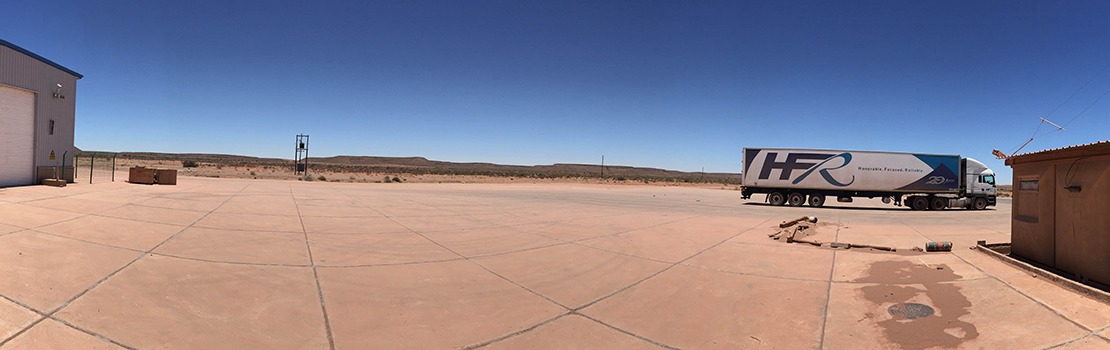
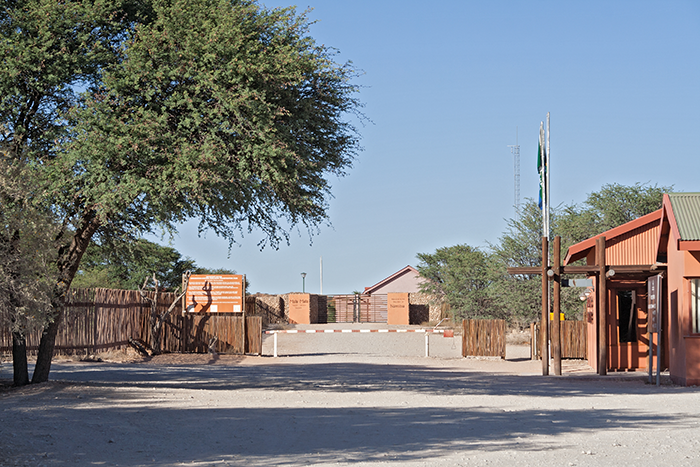
Another significant initiative that helped lay the foundations for coordination among border agencies was the country’s first Time Release Study (TRS), conducted at the Port of Walvis Bay in December 2023, followed by another TRS at the Trans-Kalahari Border Post in January 2024.
The studies highlighted the absence of a whole-of-government approach to cargo processing and revealed a fragmented institutional landscape. Border agencies operated alongside one another rather than in a coordinated manner, each applying its own procedures, mandates and inspection regimes.
The TRS findings elevated coordinated border management from a technical consideration to a strategic imperative. The Government recognized that, for Namibia to become a preferred logistics hub for trade operators in Southern Africa, improving border performance was not optional but central to competitiveness. To attract and retain transit traffic, Namibia needed to offer traders predictable and efficient border processes.
In November 2024, an Inter-Agency Standard Operations Framework for CBM was drafted following extensive consultations among government agencies, regulatory authorities and private-sector stakeholders. NamRA, as the designated lead agency for border coordination, played a central role in this process. The inclusive approach ensured that the agencies responsible for implementation were directly involved in shaping the Framework, fostering a sense of ownership and practical alignment.
The development of the Framework followed a clear and deliberate sequence, encompassing strategy development, formulation of a legal and policy framework, adoption by participating agencies and preparation for implementation.
Building national capacity: the role of the WCO Accelerate Trade Facilitation Programme
The World Customs Organization (WCO), through its Accelerate Trade Facilitation Programme, has played a critical role in supporting Namibia’s CBM journey. This support extended beyond technical advice to include institutional strengthening and capacity development. It helped build a shared understanding of CBM among border agencies, supported the development of the national Framework through in-country and virtual engagements and facilitated structured multi-stakeholder engagement through the National Technical Working Group (NTWG) on CBM.
The NTWG on CBM, established as a technical committee under the National Trade Facilitation Committee (NTFC), has been instrumental in translating international standards into practical policy outputs. Through this collaboration, Namibia’s CBM approach has been aligned with key international instruments, including the WTO TFA, the International Convention on the Simplification and Harmonization of Customs Procedures (the Revised Kyoto Convention) and the WCO Framework of Standards to Secure and Facilitate Global Trade (the SAFE Framework of Standards).
As a result, Namibia has been able to move beyond a conceptual understanding of CBM towards operational readiness, while carefully embedding CBM principles into national systems and procedures.
Putting CBM into practice
The Inter-Agency Standard Operations Framework introduces a set of coordinated mechanisms designed to streamline border processes while maintaining compliance and control. These include:
In practice, CBM is transforming border operations from a series of isolated procedures into a coordinated process based on shared logic and data.
Preparation and challenges
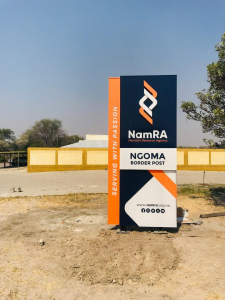 The development of Namibia’s CBM Framework was not without its challenges. A major difficulty lay in aligning the legal mandates and operational procedures of multiple agencies. Border cooperation cannot be achieved through administrative instructions alone; it requires sustained consultation and institutional alignment. Differences in ICT systems and the absence of integrated platforms also constrained information sharing. At the same time, the transition from agency-centric operations to a coordinated model required a shift in institutional culture, supported by capacity building and change management.
Namibia addressed these challenges through structured governance mechanisms, particularly the NTWG, extensive stakeholder consultations and targeted capacity-building initiatives supported by the WCO. This consultative approach ensured that the agencies responsible for applying the Framework participated in drafting it, giving them a sense of ownership that would have been lacking had the Framework been developed without their involvement.
Lessons learned
Several lessons emerge from Namibia’s CBM experience:
Results, impact and contribution to trade facilitation
Although CBM implementation is ongoing, Namibia is already observing tangible progress. The CBM Framework has established a formal basis for cooperation among agencies, replacing ad-hoc interactions with structured coordination and reducing duplication of controls. Border processes that were previously carried out separately and sequentially by individual agencies are increasingly being designed as integrated workflows based on shared logic and data.
Both TRS studies, conducted at the Port of Walvis Bay and the Trans-Kalahari Border Post, provide a baseline against which future improvements can be measured. The TRS at the Port of Walvis Bay found that the average time taken to clear and release import and transit cargo, measured from manifest submission to physical exit from the port, was 19 days, 7 hours and 32 minutes. Similarly, the TRS at the Trans-Kalahari Border Post found that the average time taken to clear imported goods, measured from the arrival of a truck at the entry gate to its release at the exit gate, was 5 hours and 31 minutes. For exports, the average clearance time at the Trans-Kalahari Border Post, measured from arrival at the entry gate to release at the exit gate, was 4 hours and 34 minutes.
CBM is expected to reduce these times, improve predictability and lower compliance costs. Integrated risk management will allow agencies to focus resources on high-risk consignments while facilitating compliant trade. Private-sector engagement has also been strengthened. The participation of stakeholders, including the Walvis Bay Port Users’ Association, has helped ensure that reforms respond to operational realities and enhance transparency.
At the strategic level, CBM improves the reliability of Namibia’s trade corridors and supports the country’s position as a regional logistics hub. It also strengthens Namibia’s ability to take advantage of the AfCFTA, under which the performance of border processes in one Member State affects the competitiveness of the wider region. Feedback from the private sector has been consistent on one point: predictability is as important as speed, because traders need to be able to plan and price a route before committing to it.
Way forward
Namibia’s CBM journey is entering a critical implementation phase. However, as emphasized by the NamRA Commissioner at the adoption of the Inter-Agency Standard Operations Framework for CBM on 4 March 2026 in Windhoek, the success of CBM will ultimately be measured not by its design but by its results.
A key priority for the next phase will be to secure Cabinet approval to support full institutionalization and ensure that coordination continues regardless of changes in personnel. This will be followed by pilot implementation at selected border posts and alignment of Standard Operating Procedures (SOPs) with the CBM Framework before its roll-out to all ports of entry, particularly those where one-stop border posts are not yet operational. ICT systems and coordinated data flows will also be strengthened. Namibia intends to maintain momentum through continued stakeholder engagement, robust monitoring and evaluation of progress, regular policy dialogues and alignment with regional and international initiatives.
Two factors will shape the pace of progress: sequencing and data. Cabinet approval will provide the mandate for permanent procedural changes, while pilot implementation will generate evidence to support wider roll-out. At the same time, the development of a harmonized national data catalogue will underpin future digital integration, including Single Window systems.
Conclusion
Namibia’s coordinated border management journey reflects a deliberate shift from fragmented border operations to a coordinated, whole-of-government approach. Supported by strong institutional leadership, inclusive stakeholder engagement and sustained international cooperation, particularly through the WCO Accelerate Trade Facilitation Programme, Namibia has established a solid foundation for reform. The next phase will focus on implementation and measurable outcomes. As CBM becomes operational across Namibia’s borders, it will play a central role in improving trade efficiency, supporting economic growth and advancing regional integration.
More information
Contact the author
[1] At the time of publication of this article in October 2026, the Inter-Agency Standard Operations Framework for CBM in Namibia awaiting Cabinet approval.
[2] See the WCO Coordinated Border Management Compendium at https://www.wcoomd.org/-/media/wco/public/global/pdf/topics/facilitation/instruments-and-tools/tools/safe-package/cbm-compendium.pdf?db=web.