

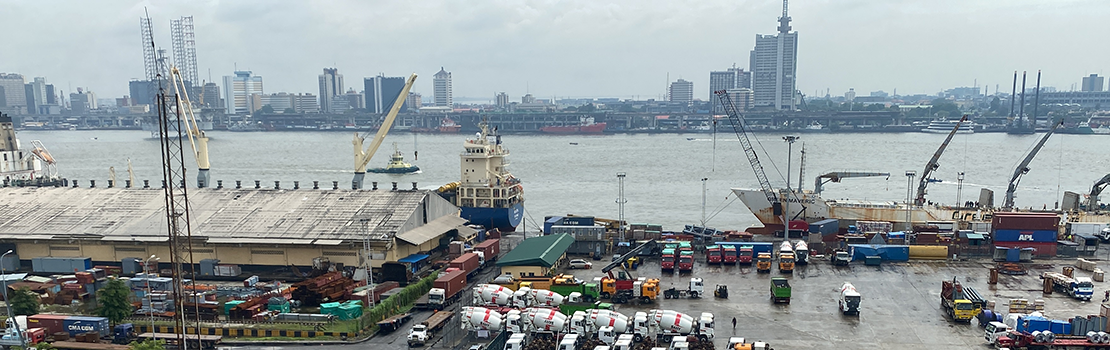
Against this backdrop, and to enable an evidence-based approach to the reform, the Nigeria Customs Service (NCS) decided in 2024 to examine the time required for the physical release of imported cargo at the Tincan Island Port Complex in Lagos, one of Nigeria’s busiest ports. To do so, it used the internationally accepted strategic tool for measuring the time taken to release goods: the WCO Time Release Study (TRS).
Conducting a TRS was not an administrative exercise, but a strategic necessity supporting the implementation of:
By providing the baseline data needed to inform digital integration, sequencing of agencies onboarding, and dashboard development, the TRS was also to contribute to the Nigeria Single Window Project, which aims at bringing Customs, other government agencies, and port stakeholders onto a single electronic interface.
Finally, the TRS also strengthens Nigeria’s compliance profile with development partners and investors by demonstrating its commitment to evidence-based policymaking and coordinated border management (CBM).
It is not the first time the NCS has conducted a TRS in a port environment. In 2010, a TRS took place at Apapa Port and contributed to subsequent reforms, including the development of a form of Authorized Economic Operator (AEO) programme known as “Fast-Track”, and a cargo pre-arrival processing system. In 2018, another TRS was conducted at the same port but could not be finalized, mainly due to a lack of inter-agency coordination and a fully institutionalized whole-of-government approach.
In 2024, the NCS had not only learned key lessons from these attempts, but was also able to secure the technical support of the WCO under the Accelerate Trade Facilitation Programme, an initiative funded by His Majesty’s Revenue and Customs (HMRC) of the United Kingdom, with which the NCS had been working since 2021. This work included projects such as the implementation of its Authorized Economic Operator programme, the review of post-clearance audit, the design of gender equality policies, and the development of leadership skills among top and middle managers.
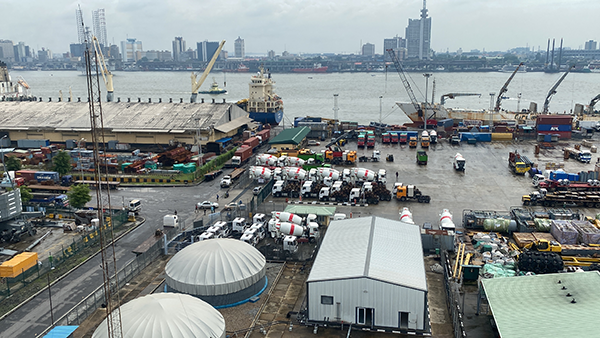
The vision behind the study undertaking
Ports do not work in isolation. Shipping lines, terminal operators, freight forwarders, Customs, and haulage firms must all move in synchronization to avoid delays and congestion.
The Tincan Island Port TRS was a reform-driven operational assessment that collected data on how cargo moves through the port ecosystem to identify inefficiencies. The data would enable the establishment of a practical roadmap to improve cargo release performance through coordinated action among port stakeholders.
Through the study, the NCS sought to:
At the centre of the initiative was a broader reform vision: building a more efficient, technology-driven, and coordinated cargo release system that could significantly reduce delays and improve Nigeria’s trade competitiveness.
Building the reform process
One of the study’s major strengths is its collaborative structure. The WCO TRS defines physical release as the step in the clearance process when goods are physically placed at the disposal of the importer or exporter, or their legal representative, for home consumption or export, or for any other Customs procedure. It recognizes cargo release as a cumulative outcome of interactions among multiple stakeholders, including Customs, other government agencies (OGAs), terminal operators, shipping companies, freight forwarders, and transport operators.
The Tincan Island Port TRS project kicked off in November 2023 with online working sessions bringing together WCO Secretariat representatives and the NCS team. Stakeholders were identified, and the TRS design and scope were agreed. A National Technical Working Group (NTWG) was established, comprising 19 NCS officers from key departments and six members of the National Committee on Trade Facilitation (NCTF), representing OGAs and the private sector. Between November 2023 and January 2024, NTWG members participated in six structured training modules facilitated by WCO experts and supported by the South African Revenue Service (SARS).
The TRS focused on containerized and break-bulk cargo, imported for either home consumption or warehousing. It was conducted from 19 February to 30 May 2024. As the information systems of the port authority, Customs, shipping lines, terminal operators, and other border agencies are not integrated, the National TRS Working Group conducted a qualitative assessment of clearance stages from the “Physical Arrival of the Vessel” up to the “Booking of a Consignment for Examination”. The quantitative study covered the period from “Booking of Consignment for Examination” to “Physical Gate out from the Port”.
The NCS collected data across various cargo processing stages, including:
The dataset comprised 601 validated declarations (109 home consumption and 492 warehousing declarations) retained for analysis. This validated dataset is representative, covering approximately 57% of all home consumption and warehousing declarations processed at Tincan Island Port during the study period.
Data was collected both manually and electronically. We extracted electronic, time-stamped data from the Nigeria Integrated Customs Information System (NICIS II). Manual surveys were provided to the key actors, such as Customs officers, terminal operators, OGAs, and clearing agents. The NCS had to be very creative to obtain responses, organizing meetings both physically and virtually to encourage stakeholder participation in the study. NTWG members also conducted field observations at operational hotspots (e.g. scanning zones, truck exits). All datasets were validated and analysed using Excel, supported by the WCO TRS software for structure and benchmarking.
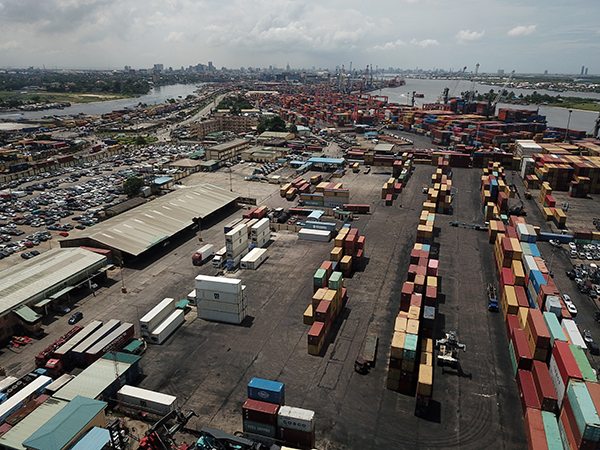
Key findings: understanding the nature of the delays
The TRS findings and recommendations were officially published and launched in January 2026, in line with WTO Trade Facilitation Agreement (TFA) Article 7.6 on establishing and publishing average release times.
As vessel arrival information is not captured through a single, integrated platform accessible to all relevant stakeholders, it was not possible to systematically link vessel arrival times with subsequent port and border clearance activities. The Working Group observed that port authorities, terminal operators, shipping lines, Customs, and other border agencies operated largely through separate systems and procedures, with limited real-time data exchange. This fragmentation delays the transmission of arrival information, duplicates processes, and creates uncoordinated workflows, which in turn prolongs the time before importers and agents can initiate clearance formalities.
The study found that the average cargo clearance time (booking-to-exit) for 98.7% of consignments was 3 days, 14 hours, and 34 minutes. This does not account for eight unusual consignments that took over three months to be released.
However, traders’ experiences varied significantly, depending on whether consignments were scanned, physically examined, or processed through the fast-track scheme which enabled certified traders to benefit from expedited movement of consignments out of the port, without Customs intervention, to their premises. Consignments sent for scanning achieved 100% same-day clearance, with an average processing time of just 44 minutes and 19 seconds. were cleared within the same day, with an average clearance time of 6 hours, 18 minutes, but they represented a small fraction of total traffic.
This confirms that where prioritization and NII are applied, same-day clearance is achievable.
One of the most important revelations was the dominance, within the clearance cycle, of idle time between booking and inspection, mainly due to unsynchronized inspections and fragmented communication between agencies. More than 90% of the total duration consisted of non-value-adding waiting periods, rather than active processing activities.
“Our challenge is not that we cannot move goods fast; it is that goods are not allowed to move fast.” NCS Comptroller-General at the official launch of the TRS in January 2026
The findings revealed critical inefficiencies, listed below, within the cargo clearance process.
Turning findings into reform actions
Several operational recommendations emerged from the study:
The NCS and the members of the TRS Working Group transformed the findings into a practical reform roadmap with clear implementation timelines and institutional responsibilities.
Immediate implementation priorities include:
Medium- and long-term goals include:
Lessons learned along the journey
Several important lessons emerged from Nigeria’s TRS experience at Tincan Island Port.
First, the study demonstrated that substantial improvements in cargo clearance efficiency can be achieved through institutional coordination and procedural reforms, without necessarily requiring large-scale capital investments.
Second, the exercise reinforced the importance of data-driven decision-making in Customs modernization and border management reforms.
Third, the findings highlighted the transformative role of automation, non-intrusive inspection technology, and digital integration in reducing delays and improving compliance management.
Most importantly, the study showed that trade facilitation is a shared responsibility requiring synchronized action among all stakeholders operating within the port ecosystem.
As captured in the study: “The effectiveness of cargo clearance is not solely a function of individual actors, but a cumulative outcome of synchronised actions across multiple stakeholders.”
Expected impact of the reform
The projected impact of implementing the TRS recommendations is substantial.
The study estimates that coordinated implementation of the proposed reforms could:
The reforms are also expected to significantly reduce demurrage costs, improve predictability in cargo movement, and strengthen investor confidence in Nigeria’s port system.
Looking ahead: sustaining the momentum
The Nigeria Customs Service has continued to position the TRS not as a one-time exercise, but as a continuous reform mechanism supporting long-term trade facilitation and Customs modernization.
The partnership with the WCO Accelerate Trade Facilitation Programme played a critical role not only in building TRS technical knowledge, but also in strengthening institutional capacity and stakeholder coordination. Through extensive capacity building, hands-on technical support, remote mentoring sessions and close collaboration with the National TRS Working Group, the NCS and partner government agencies significantly enhanced their operational capacities, and are ready to independently conduct future studies on a regular basis and at various border posts across the country.
For the Nigeria Customs Service and other government agencies, the study reaffirmed that sustainable trade facilitation is achieved not merely through policy declarations, but through measurable actions, institutional partnerships, and continuous operational improvement.
As Nigeria advances its Customs modernization agenda and deepens regional trade integration, the lessons from the Tincan Island Port TRS offer valuable insights not only for Nigeria, but for Customs administrations and border agencies across the international trade community seeking to build faster, smarter, and more efficient border systems.
More information
www.customs.gov.ng