In this article, Chile Customs argues that, by breaking down traditional institutional silos and applying geospatial intelligence, governments can effectively strip transnational organized crime of the economic oxygen that fuels its survival. It explains how Chile Customs transformed its approach to combating trade-based money laundering (TBML) by joining the WCO OCTAGON Project, shifting its focus from a commodity-centric lens to the mapping of “hot zones” and strengthening cooperation with the Chilean Financial Intelligence Unit.
Over the past two decades, criminal organizations operating in South America have undergone a profound structural transformation. Whereas dominant cartels once resembled hierarchical, vertically integrated enterprises controlling production, transport and distribution end to end, contemporary networks increasingly function as flexible service providers and modular ecosystems.[1] This shift reflects strategic adaptation to intensified law enforcement pressure, market fragmentation, technological change and the rapid globalization of trade. Rather than owning every step of an illicit chain, modern groups orchestrate networks of specialists – such as transport brokers, corrupt port officials, front companies and money-movement intermediaries – that rent capacity and expertise. In effect, they have evolved from monolithic cartels into logistics-focused platforms that provide discrete criminal services to multiple buyers, optimizing risk and capitalizing on economies of scale.
A central feature of this evolution is what analysts call “convergent criminality”[2] in the movement of illicit goods. The same maritime route, the same shipping container and the same Customs intermediary can be reused to move distinctly different illicit commodities – cocaine, counterfeit cigarettes, illegally mined gold or chemical precursors – often within overlapping time frames and with minimal structural change. This convergence arises because criminal actors prioritize lowering marginal costs and reducing operational exposure. By pooling resources such as vessels, warehousing and corrupt officials, groups achieve greater throughput at lower per-unit risk, akin to economies of scale in legitimate supply chains. The result is a resilient, modular criminal market in which specialized providers can be swapped in and out with limited disruption to the broader illicit architecture.
These criminal actors do not only exploit global trade systems to move illicit goods. They also use them to launder money through methods such as false invoicing, misdescription of goods, manipulation of quantities or values, misuse of trade documentation and phantom shipments to integrate illicit value into legitimate commercial circuits.[3] Such schemes are grouped under the term trade-based money laundering (TBML).
Countries with high maritime connectivity and strong commitments to free trade – bolstered by extensive networks of trade agreements – provide ideal conditions for this hybrid illicit-licit integration. Recent law enforcement actions in South America have exposed the staggering scale of this integration. In Brazil, major operations dismantled an intricate financial network associated with the Primeiro Comando da Capital (PCC), Brazil’s largest and most organized criminal organization, which laundered billions through a vast infrastructure of fuel distribution chains, shell entities and specialized digital fintech companies that acted as a shadow banking system to exploit regulatory gaps.[4]
Analysing trade risk strictly within domestic checkpoints is an obsolete paradigm
Because transnational criminal networks do not see South America as a collection of isolated jurisdictions, but as a continuous, integrated logistics canvas, localized cargo interdictions merely force them to reroute commodities to neighbouring transit points. To combat this type of crime, Chile Customs believes in the strategic use of geospatial intelligence.
This new enforcement paradigm is promoted by the WCO through the WCO Hot Zone Prioritization Forum (HZPF), created under Project OCTAGON – a WCO initiative funded by the United States Department of State’s Bureau of International Narcotics and Law Enforcement Affairs (INL) to build Customs capacity to disrupt Transnational Criminal Organizations (TCOs) and illicit financial networks.
Instead of requiring states to distribute limited enforcement resources uniformly along extensive, linear borders, the HZPF advances a methodology of geographic prioritization. A “hot zone” or critical sub-region is not defined merely by its lines on a map, but as a complex socio-legal node where high criminal density, logistical infrastructure and gaps in state capacity intersect. These zones frequently manifest as specialized transhipment ports, high-density free trade zones or porous border corridors where multiple illicit economies converge. In practice, this geospatial approach replaces reactive, random profiling with predictive risk mapping. By inviting Customs administrations and FIUs to work together to map the geographic concentration of convergent criminality, the HZPF supports states in deploying control methodologies – such as non-intrusive container inspection equipment, joint audits and beneficial ownership investigations – directly against the critical chokepoints that sustain transnational criminal infrastructure.
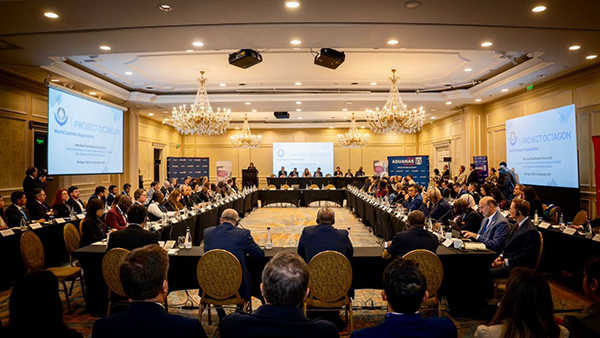
The first Forum, hosted at WCO Headquarters in Brussels in October 2022, established a mandate to generate a dynamic “prioritization list” of geographic sub-regions highly vulnerable to exploitation by criminal syndicates and terrorist groups.[5] This strategic list was designed not as a static report but as a three-year roadmap subject to annual reviews to ensure that emerging threat trends are taken into account. The Forum achieved greater operational maturity during its second edition in Sofia, Bulgaria, in November 2024, where more than 70 experts from 24 countries refined the methodology with the explicit aim of targeting the interception points of cross-border financial crime.[6] By the time the third edition convened in Santiago, Chile, in September 2025, the Forum had expanded to encompass nearly 100 specialists representing 38 countries, broadening its analytical lens to incorporate Regional Intelligence Liaison Offices (RILOs), international police organizations and specialized financial bodies.[7] The HZPF has now evolved from a pilot initiative into a premier global platform for multi-agency intelligence fusion.
Breaking institutional silos
At its core, the HZPF was designed to help dismantle entrenched institutional silos that have long paralysed state responses to transnational crime. In traditional governance models, Customs agencies and Financial Intelligence Units (FIUs) operate on parallel but disconnected tracks: Customs inspectors examine physical manifests, bills of lading and container vulnerabilities at ports of entry, while FIU analysts scrutinize suspicious transaction reports (STRs) and banking flows deep within the financial system. Co-organized with the Egmont Group of Financial Intelligence Units, an international organization that facilitates cooperation and intelligence sharing among national FIUs, the HZPF aims to bridge this gap and ensure that trade-based indicators and asset-tracing workflows are evaluated simultaneously.
Furthermore, the Forum introduces a critical third element by embedding rigorous academic research into its operational design, leveraging the data analytics, methodological expertise and structural threat modelling provided by the Terrorism, Transnational Crime and Corruption Center (TraCCC) at George Mason University. This tripartite alliance of Customs enforcement, financial intelligence and academic research transforms disjointed border signals into cohesive, multi-layered threat assessments.
Strengthening the Customs-FIU nexus in Chile
Chile offers a highly practical and scalable operational example of how national anti-money laundering strategies can be enhanced by working at the Customs-FIU nexus, with both institutions operating under the Ministry of Finance.
Compliance with the FATF 40 Recommendations and the effectiveness of the country’s anti-money laundering system were first rigorously assessed by a team comprising legal, financial and law enforcement specialists from different agencies using the mutual evaluation framework of the Grupo de Acción Financiera de Latinoamérica (GAFILAT), the FATF-style regional intergovernmental organization bringing together 18 countries from South, Central and North America. The national security architecture was expanded to encompass anti-proliferation objectives and efforts to combat sophisticated financial networks.[8]
This led to the creation of a broad, legally mandated institutional arrangement known as the Intersectoral Roundtable on the Prevention and Combating of Money Laundering and Terrorist Financing (MILAFT). Under the current national strategy, the MILAFT framework orchestrates the combined efforts of 31 public institutions distributed across five specialized technical working groups covering legislative updates, supervision, cross-border risk assessment, financial intelligence and criminal prosecution. This comprehensive administrative matrix functions as a tightly coordinated ecosystem designed explicitly to connect border prevention, Customs detection, financial analysis and asset-targeted judicial enforcement.
A milestone in the validation of this model was the hosting of the third edition of the Hot Zones Prioritization Forum (HZPF) in Santiago, Chile,[9] in 2026 which emphasized that the rapid convergence of illicit economies in South American trade corridors cannot be countered through isolated agency mandates. Instead, the implementation of joint risk profiles and specialized spatial analytics emerged as a requirement for identifying the corporate and logistics structures supporting transnational smuggling operations. The core operating principle derived from the Chilean HZPF experience is conceptually simple but structurally profound: financial intelligence is blind without the physical data captured by Customs; conversely, Customs intelligence remains incomplete and reactive without comprehensive asset tracing.
To operationalize this principle and eliminate institutional blindness, Chile’s MILAFT framework institutionalized the Financial Intelligence and Customs Fellowship Programme (Programa de Pasantías de Inteligencia Financiera).[10] This specialized initiative moves beyond occasional inter-agency meetings by integrating front-line Customs inspectors and trade data analysts within Chile’s FIU operational tactical divisions for a few months at a time. During these intensive rotations, Customs officials are trained in the entire lifecycle of financial intelligence, learning how the FIU processes suspicious transaction reports (STRs) and cash border declarations (DPTE). Concurrently, FIU analysts engage with maritime and land port authorities and gain direct exposure to the complexities of maritime logistics, commercial bills of lading and the complex mechanics of trade-based money laundering (TBML) typologies. This reciprocal capacity-building programme equips border regulators with the precise financial indicators needed to detect shell company manoeuvres at the point of entry, while providing financial analysts with the physical cargo markers necessary to initiate asset-tracing investigations.
“Combating money laundering requires much more than specialized knowledge; it demands trust, communication and cooperation among the various government agencies”
By Solange Godoy, Coordinator of the AML/CTF Team at the Intelligence Department, Chilean National Customs Service
I had been working for the Chilean National Customs Service for more than 20 years when, in August 2023, I joined the Chilean Financial Analysis Unit (UAF) for six months under the Financial Intelligence and Customs Fellowship Programme (Programa de Pasantías de Inteligencia Financiera).
This experience marked a turning point in my professional and personal development. After more than two decades working exclusively at Customs, stepping out of my comfort zone to join an institution with a different work culture represented one of the greatest challenges of my career.
From day one, I understood that the technical knowledge I had acquired over so many years could make a significant contribution to UAF analysts. I was familiar with concepts, documents and procedures specific to foreign trade, an area whose workings they found complex to understand. I was able to contribute to the identification of numerous potential trade operations that could be linked to money laundering.
The traineeship also provided a unique opportunity to acquire entirely new knowledge. After spending three months in the Financial Intelligence Division, I joined the Strategic Intelligence Division, where I learned about analytical methodologies, financial intelligence report writing and strategic intelligence production. Both divisions have distinct but complementary approaches, and, in each, I learned new analytical tools that significantly broadened my professional perspective.
I also learned from the two other trainees, who came from the Internal Revenue Service and the General Treasury of the Republic. We shared knowledge, experiences and best practices and gained a deep understanding of the role each agency plays within the national system for preventing money laundering and the financing of terrorism. This comprehensive perspective strengthened our ability to work in a coordinated manner and to identify opportunities for collaboration among institutions.
Each trainee was responsible for preparing financial intelligence reports which, once reviewed and validated by colleagues from the UAF, were submitted to the Public Prosecutor’s Office to support criminal investigations. This task allowed me to understand the importance of quality analysis within the investigative process and the impact it can have on the prosecution of economic and financial crimes.
Undoubtedly, one of the main lessons I learned was an understanding of the strategic role played by the National Customs Service in the prevention and detection of money laundering, the financing of terrorism and the financing of proliferation. Before this experience, I did not fully grasp the value of Customs information for the development of financial intelligence. Today, I am convinced that Customs is a key player in the early detection of suspicious transactions related to foreign trade.
At the end of my traineeship, I returned to the National Customs Service to rejoin the Drugs and Related Crimes Department. However, shortly afterwards, I was assigned to the Customs Intelligence Department, and I currently serve as Coordinator of the Money Laundering Programme. In this capacity, I have contributed, among other initiatives, to the planning and reporting of enforcement activities carried out during WCO Operations Tentacle South America, which took place in 2024 and 2026 and during which Chile reported more than 300 seizures and launched more than 10 AML-related investigations.
Looking back, I can affirm that the greatest value of this experience lay not only in the technical knowledge acquired, but also in the relationships of trust built with professionals from various institutions. To this day, I maintain close coordination with analysts at the UAF, as well as with colleagues from the Internal Revenue Service and the General Treasury of the Republic who participated in the traineeship. This network has become an invaluable tool for the interinstitutional work we are currently developing.
The traineeship allowed me to understand that combating money laundering requires much more than specialized knowledge; it demands trust, communication and cooperation among the various government agencies. Being part of this experience strengthened my professional skills, broadened my understanding of financial intelligence and reaffirmed my commitment to collaborative work in confronting organized crime and protecting the integrity of our country’s financial system and foreign trade.
This operational synergy has been further reinforced by the high-level directives of Exempt Decree No. 194 of the Ministry of Finance.[11] This structural legal mandate formally established the Commission to Combat Tax Evasion, Contraband, Customs Fraud, Money Laundering and Organized Crime, legally compelling the top leadership of the Internal Revenue Service (SII), the National Customs Service and the FIU to execute joint auditing strategies. By tying the HZPF’s geospatial risk mapping directly to these mandatory inter-agency task forces and the Fellowship Programme, Chile demonstrates how a state can transition from uncoordinated, commodity-specific seizures to a holistic, asset-based enforcement strategy.
Ultimately, this integration ensures that every physical anomaly detected at a border checkpoint immediately feeds into a wider, cross-border financial disruption mechanism, stripping transnational syndicates of the economic infrastructure that makes their trade profitable.
Operation Alto Voltaje illustrates how close synchronization of technical and operational capabilities among different state entities can produce results. This complex inter-agency investigation, which developed over more than a year, successfully dismantled Chile’s most significant criminal organization dedicated to the theft, storage, transformation and smuggling of copper material and the laundering of the proceeds.
The main results of the operation included the execution of simultaneous raids on 49 properties across seven regions of the country, with 25 individuals arrested; the historic seizure of 187 tonnes of processed copper, including six containers with nearly 140 tonnes intercepted in Iquique; and the confiscation of high-end vehicles and firearms, as well as the formal charging of those involved with crimes of illicit association, receiving stolen goods, smuggling, tax fraud and money laundering.
The structural transformation of South American transnational crime from rigid, hierarchical monopolies into fluid, logistics-focused service platforms carries profound institutional lessons for enforcement authorities. If they continue to measure institutional success solely through isolated physical interdictions at domestic checkpoints, they merely force criminal networks to reroute commodities, failing to disrupt the underlying corporate and economic structures of illicit supply chains. Supply chain integrity depends on a state’s capacity to transition from reactive cargo suppression towards predictive geospatial intelligence and integrated financial countermeasures.
Customs administrations and oversight bodies should prioritize the following actions:
- Institutionalize geospatial and multi-agency intelligence frameworks. Following the design of the HZPF methodology, implement standardized, real-time data cross-referencing between Customs registries, Financial Intelligence Units (FIUs) and academic research centres. By systematically mapping where high criminal density, logistical infrastructure and regulatory gaps intersect, border regulators can transition from random or historical profiling towards predictive risk mapping. This approach allows administrations to deploy targeted enforcement methodologies – such as non-intrusive inspection operations and beneficial ownership reviews – directly against the critical geographic chokepoints that sustain transnational illicit corridors.
- Operationalize cross-agency fellowship programmes and joint capacity building. The deep connection between trade anomalies and trade-based money laundering (TBML) demands that front-line personnel speak a common operational language. Replicating the Financial Intelligence and Customs Fellowship Programme developed under Chile’s MILAFT framework provides a proven roadmap. By integrating Customs inspectors within FIUs and financial analysts within maritime and land port authorities, governments can systematically eliminate institutional blindness.
- Secure access to advanced technology. Governments must recognize that funding modern Customs infrastructure is not an administrative or discretionary expense but a fundamental pillar of national security and fiscal defence.
- Develop partnerships with academic institutions at national level. As this involves data sharing, it requires legal changes and political support.
- Strengthen international cooperation and participation in the WCO Forum, exchange real-time operational intelligence, harmonize risk management methodologies and adopt global standards against trade-based money laundering (TBML).
Ultimately, Customs will not be judged by the sheer volume of physical commodities seized, but by the resilience of the multi-agency architecture built to prevent criminal value from entering the international trade stream in the first place. By breaking down traditional institutional silos and applying geospatial intelligence to inform enforcement strategies, governments can transform fragmented information into a coordinated, deterrent transnational response and effectively strip transnational organized crime of the economic oxygen that fuels its survival.
More information
Contact the author.
[1] United Nations Office on Drugs and Crime (2023). World Drug Report 2023. https://www.unodc.org/unodc/en/data-and-analysis/world-drug-report-2023.html
[2] United Nations Office on Drugs and Crime (2025). World Drug Report 2025: Key Findings. https://www.unodc.org/documents/data-and-analysis/WDR_2025/WDR25_B1_Key_findings.pdf
[3] Global Financial Integrity (2021). Trade-Based Money Laundering: A Global Challenge. https://gfintegrity.org/report/trade-based-money-laundering/
[4] SWI swissinfo.ch (2025, August 28). Brasil desmantela un sofisticado esquema de lavado de dinero con un millar de gasolineras vinculadas al crimen organizado. https://www.swissinfo.ch/spa/brasil-desmantela-un-sofisticado-esquema-de-lavado-de-dinero-con-un-millar-de-gasolineras-89912231/
[5] World Customs Organization (2022b). WCO and Egmont Group host the Hot Zone Prioritization Forum. https://www.wcoomd.org/en/media/newsroom/2022/october/wco-and-egmont-group-host-the-hot-zone-prioritization-forum.aspx
[6] World Customs Organization (2024). WCO holds successful session on spatial intelligence and Project OCTAGON framework. https://www.wcoomd.org/en/media/newsroom/2024/november/wco-holds-second-hot-zone-prioritization-forum-in-bulgaria.aspx
[7] World Customs Organization (2025). Third Edition of WCO HZPF Enhances Global AML-CTF Efforts. https://www.wcoomd.org/en/media/newsroom/2025/september/third-edition-of-wco-hzpf-enhances-global-aml-ctf-efforts.aspx
[8] Financial Action Task Force of Latin America (2025). Mutual evaluation framework and regional update on illicit financial flows along riverine trade corridors. GAFILAT. https://biblioteca.gafilat.org/wp-content/uploads/2026/02/Informe-de-Tipologias-Regionales-LA-FT-25.pdf
[9] Thibaut, J. A. (2026). El Foro de Priorización de Zonas Críticas y la cooperación internacional frente a los flujos financieros ilícitos: Implicancias estratégicas para Sudamérica y Chile. Revista chilena de prevención y persecución del lavado de activos y financiamiento del terrorismo, 4, 18-26. https://www.uaf.cl/media/documentos/REVISTA.VOL_IV_F.pdf
[10] Unidad de Análisis Financiero (2025). Plan anual de fortalecimiento de capacidades MILAFT: Segundo programa de pasantías sobre el proceso de inteligencia financiera para agencias fiscalizadoras. https://www.estrategiaantilavado.cl/es-cl/detalle-noticia?id=5424
[11] Ministerio de Hacienda (2024). Decreto Exento N° 194: Crea Comisión de Lucha contra la Evasión Fiscal, el Contrabando, el Fraude Tributario y Aduanero, el Lavado de Activos y el Crimen Organizado. https://www.uaf.cl/es-cl/noticia-detalle?id=42640