From dialogue to results: How Uzbekistan’s Customs is leveraging dialogue with business to inform possible reforms
17 November 2026
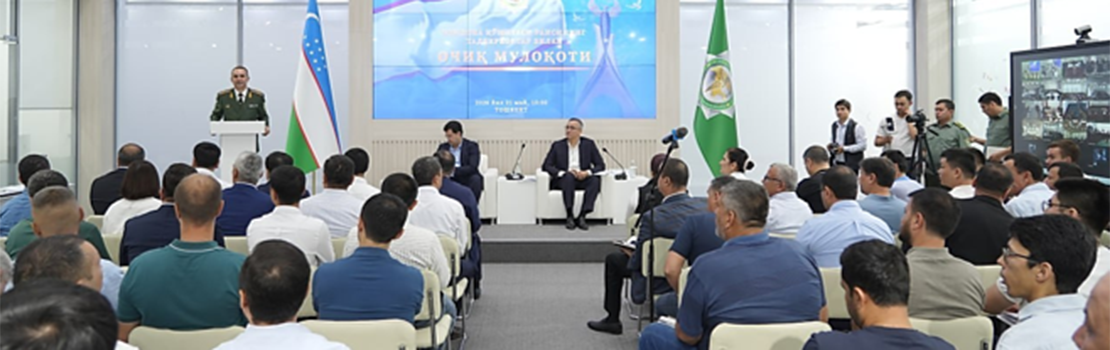
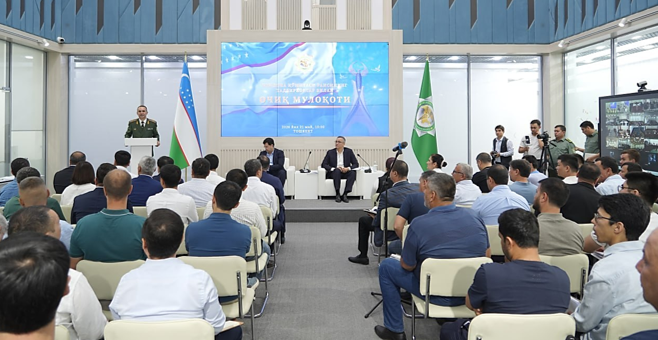
By Gayrat Farkhadovich Nasirov, First Deputy Chairman of the State Customs Committee of the Republic of UzbekistanThe “open dialogue” takes the form of meetings with business representatives, which are organized quarterly under the leadership of the Chairman of the Customs Committee. The goal is not simply to answer individual questions, but to turn the input received from business into practical decisions, interagency measures and, where necessary, legislative proposals for improving regulation.
“Open dialogue with businesses enables Uzbekistan Customs to develop regulatory proposals and reforms which directly facilitate trade operations.”
To engage a broader range of participants beyond large, experienced operators, regional meetings are also held. Making it easier for small and medium-sized businesses to communicate practical problems directly to decision-makers is critical as they often have fewer resources to navigate complex procedures or resolve issues that span multiple agencies.
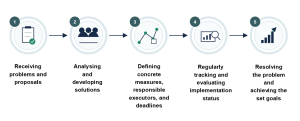
A Five-Stage Institutional Model
The model is based on a simple sequence: submission of a question/case, discussion, roadmap, monitoring, and result. Its significance lies in the fact that consultation becomes a structured and manageable cycle for each issue, with a designated person responsible for implementation, a deadline, and a clear monitoring procedure established.
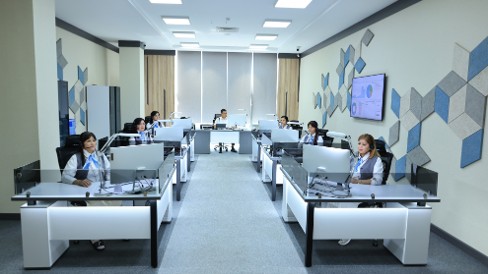
The process begins before the meeting itself. Entrepreneurs, business associations, Customs brokers, manufacturers, exporters, importers, and logistics companies submit issues through existing communication channels. These include the Customs Committee’s call centre, whose capacity has been expanded to enable prompt reception of requests and the provision of advice or the setting up of consultations with Customs. Questions and requests are then grouped by topic and examined by the relevant Customs divisions.
This preparatory stage is crucial in orienting the dialogue towards results. It allows specialists to study the legal and practical aspects of an issue in advance, involve the relevant agencies, and prepare possible solutions. As a result, the Chairman of the Customs Committee is not presented with the raw problem itself, but with a proposal already developed around possible solutions, responsible structures, and specific deadlines. At the same time, the open format preserves participants’ ability to raise new issues directly during the meeting as well.
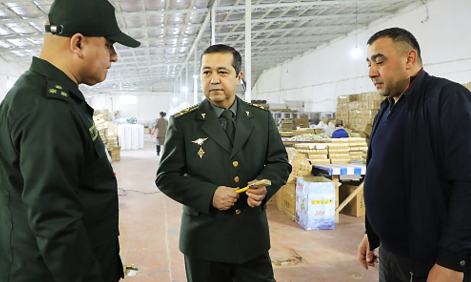
As their confidence in the Customs Committee has significantly strengthened, business representatives have begun raising concerns related to other government agencies whose activities, while not directly falling within the competence of Customs, nevertheless affect foreign trade and logistics processes.
The Customs Committee has therefore started inviting to the open dialogue sessions the heads of agencies and organizations responsible for technical regulation, sanitary control and taxation, as well as the Ministry of Transport, the Business Ombudsman, the Chamber of Commerce and Industry, and local government authorities. Ensuring their participation has been key to removing several trade barriers, especially those that arise where institutional mandates overlap.
Initial Results
During the first half of 2026, a total of 1,568 business representatives participated in 13 open dialogue sessions held across the country. In addition, 138,967 appeal requests submitted by individuals and legal entities through the call centre were reviewed in accordance with the law.
The issues raised covered Customs valuation of goods, tariff classification, risk management, certificates of conformity and sanitary documentation, the application of benefits and exemptions, foreign trade contracts, Customs deposit accounts, and transit operations, as well as the integration of information systems.
Nearly 60% of the issues raised during the open dialogue sessions were resolved either during the meetings themselves or within a short period thereafter, demonstrating the practical value of bringing decision-makers and technical specialists together in one setting. Moreover, 20% of appeals have been turned into regulatory proposals, confirming that individual cases can reveal systemic problems and contribute to broader reforms.

The following cases illustrate how business information led to major improvements:
- Standardizing calculation methodology: A textile enterprise in Andijan region faced a problem related to the calculation of fabric loss during a three-stage garment production process – weaving fabric from yarn, dyeing it, and producing finished garments – conducted under the “processing within the Customs territory” regime.[1] During a session of the open dialogue, a method for calculating natural losses of fabric in the manufacturing process was agreed on, eliminating any legal ambiguities.
- Integrating agencies’ IT systems to facilitate clearance: An enterprise engaged in processing and exporting raw materials complained of delays in the processing of vehicles and cargo due to the time required to obtain permits for goods from the Ecology and Environmental Protection Agency. During a session of the open dialogue, specialists from the Customs Committee and the Ecology and Environmental Protection Agency reviewed the permit-issuing procedure and how data was exchanged. Measures providing that Customs authorities were to prepare electronic permits in advance, before goods arrive at the border, and to issue them through an accelerated procedure, were adopted and implemented, and the issue was promptly resolved.
- Improving the transport and logistics sector: Some entrepreneurs complained about the national carriers’ ageing vehicle fleet, arguing that high import duties on freight vehicles were a key reason why many carriers continue to use outdated vehicles. They also reported a shortage of modern logistics centres and limited transport infrastructure in certain regions. Together with Customs, other government agencies, the Ministry of Transport and the Central Bank, they developed a proposal which was adopted at Presidential level and which exempts freight vehicles that are no more than five years old from Customs duties and recycling fees until 2028. It is also planned to specialize six regions in transport and logistics, allocate 300 hectares of land for new logistics centres, Customs terminals, and parking facilities, and to expand the railway infrastructure.
From Individual Cases to Systemic Reforms
Quickly resolving a problem an entrepreneur has encountered is important. But an even more important task is analysing such situations and eliminating the factors causing them to recur. If similar problems keep arising, this signals a need to reconsider procedures, guidance materials, staff qualifications, risk profiles, or legislation.
For this reason, the Customs Committee classifies cases by region, sector, product group, responsible agency, review timeframe, and final outcome, using a unified digital case management module. The tool also allows entrepreneurs to see the status of their appeal, while giving managers the ability to monitor the case in real time.
Data analysis and artificial intelligence are used to classify appeals, group similar cases, and identify recurring problems, while final legal assessments are conducted by specialists, with information security and commercial confidentiality protected throughout. Over time, this makes it possible to identify recurring barriers and swiftly eliminate trade-related problems. For example, repeated appeals concerning the same document may indicate the need to abolish, standardize, or introduce electronic exchange concerning that requirement between agencies. Recurring disputes over the classification of goods suggest a need for clearer explanations or for expanding the practice of pre-determining a product’s HS code. Delays linked to a particular border post or product group, meanwhile, may point to problems in infrastructure, staffing, or risk management.
Encouraging Active Applicants and Entrepreneurs
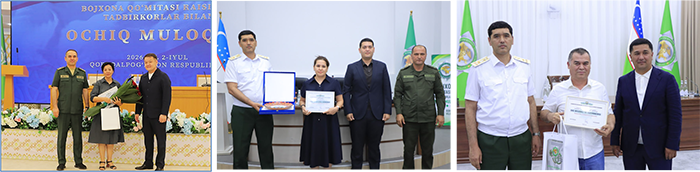
To encourage entrepreneurs who are contributing to the country’s economic development, certificates and prizes are awarded to business entities. Categories include “Best Processor in a Customs Territory”, “Best Exporter”, “Best Payer of Customs Duties”, “Most Disciplined Participant in Foreign Trade Activity”, and “Best Woman Entrepreneur”. The initiative serves to popularize best practices, support healthy competition, and strengthen mutual trust between the Customs Committee and business representatives.
Open Dialogue as the Foundation for Effective Reforms
The open dialogue with business established in Uzbekistan is bringing cooperation to a new level. It has created a continuous problem-solving process, from receiving appeals from entrepreneurs, to discussing problems with experts, setting clear tasks and implementation deadlines, monitoring results, and providing feedback. Entrepreneurs are promptly informed about decisions made and subsequent practical measures, and solutions of general significance are communicated to the wider business community to reduce the recurrence of the same issues.
The dialogue has not only enabled Customs to remove trade barriers and improve procedures, but also to fine-tune its risk management system, to further integrate information systems, to upgrade staff qualifications, and to revise regulatory documents. It demonstrates that the systematic analysis of problems reported by trade operators can be an effective tool for improving Customs administrations, removing barriers to trade, and creating a convenient, transparent, and stable trade environment.
More Information
https://www.customs.uz/
[1] This regime allows the processing of imported raw materials and intermediate goods within the national Customs territory under specific Customs control conditions.