Building and cultivating a network
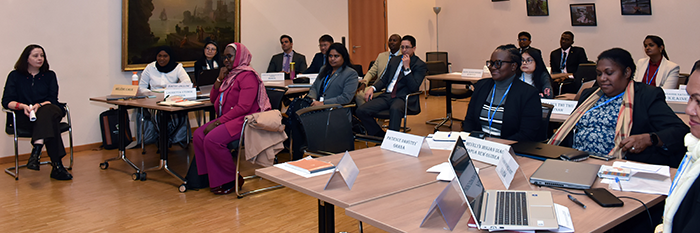
As of October 2026, the Programme has successfully completed 96 sessions bringing together more than 1,100 Customs officials worldwide. Over a seven-week period, participants learn about WCO standards and tools, undertake a research study on a Customs topic of choice, participate in a Leadership and Management Development (LMD) workshop, and visit a Customs administration for a practical field study.
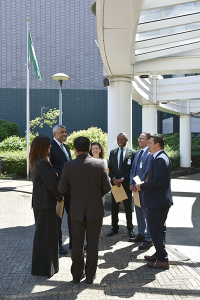
The Programme creates an environment where learning becomes a truly collective endeavor with activities including group discussions, case studies, workshops and practical exercises during which participants are encouraged to share their professional expertise, compare national practices and explore innovative approaches to common Customs challenges.
Once they have completed their session and return to their respective administrations, participants are invited to continue engaging with each other and with the Secretariat, notably through a dedicated channel on the CLiKC! platform. Many are doing so, forming a growing international network of Customs professionals committed to mutual support, knowledge sharing and capacity building.
The WCO Secretariat organized the first global Virtual Fellowship Programme Alumni Meeting in June 2026, bringing together 178 former fellows. Discussions focused on how the projects they led contributed to protecting society, in line with the WCO’s 2026 theme, “Customs protecting society through vigilance and commitment”. Seven participants also shared success stories and testimonials illustrating how the Programme enhanced their leadership skills, supported their administration modernization efforts, and contributed to their professional growth.
The power of peer-to-peer mentoring
At the request of the Fellowship Programme alumni community, a mentorship component was introduced in September 2025 promoting knowledge transfer, encouraging continuous learning and reinforcing ties between fellows worldwide.
Four fellows have already acted as mentors during a session of the programme, enabling participants to learn directly from a Customs counterpart who has dealt with issues or challenges like those they are facing. Mentors do not simply provide guidance; they act as facilitators, advisers and sources of encouragement, helping their peers reflect on their learning path and identify opportunities to apply their newly acquired knowledge into practice, while preparing them to overcome the challenges ahead.
The peer-to-peer element of the Programme also strengthens participants’ sense of belonging to the Customs community. Ultimately, the approach shows that it is often through professional dialogue, the sharing of experiences and the willingness of peers to help others succeed that the most significant growth occurs.
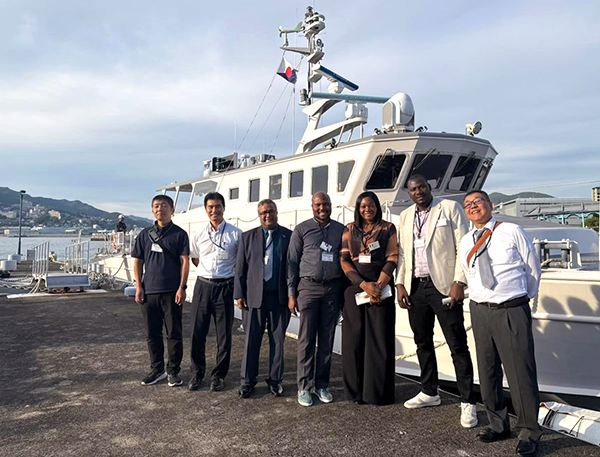
From fellow to change leader: the experience of Aliou Sane
Lieutenant Aliou Sane of the Senegal Customs Administration took part in the 87th edition of the Programme (2023) during which he developed a modernization project aimed at strengthening integrity within his administration. This led him to specialize further in this field and, ultimately, become a WCO-accredited Customs Modernization Advisor on Integrity in 2024.
When he received the invitation to become a mentor for the Programme, Aliou jumped at the opportunity. He is currently involved as a mentor in the 96th edition of the Programme. Drawing on his personal experience, Aliou encouraged fellows to focus on three key principles: learning, understanding, and taking action. He stressed the importance of mastering the WCO instruments and national contexts, understanding the role of Customs as a driver of development and modernization, and actively applying knowledge gained to drive change within their administrations.
As well as leading an effective session on his career path and his experiences since taking part in the Fellowship Programme, he participated in the daily sessions of the online component of the Programme in order to actively support the fellows’ learning and discussions. His commitment continued throughout the other phases of the Programme, during which he made himself fully available to provide personalised support until every fellow had submitted their modernization project. He carried out regular follow-ups with each fellow, contacting them personally by telephone to assess their progress, discussing any difficulties they encountered and providing them with practical advice and tips for success in achieving their objectives.
Aliou’s journey reinforces the belief that the Programme is able to not only develop technical expertise but also contributes to the development of a new generation of Customs leaders and agents of change.
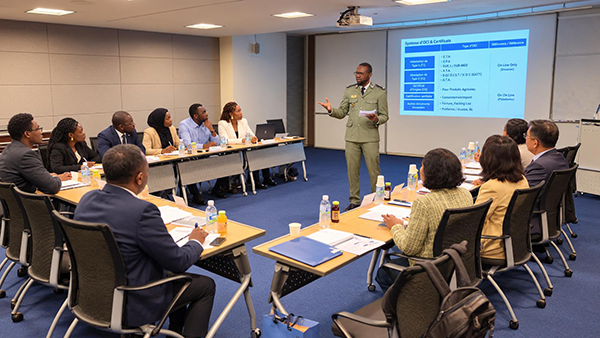
What mentees are saying
Feedback from mentees has been very positive. “Hearing directly from those who walked this path before us provided me with invaluable lessons”, explained Katerina Cabanillas Guerra from Peru, adding that “former fellows’ practical advice on overcoming internal resistance gave me a massive confidence boost to execute my modernization project.”
She also highlighted that former fellows bring to life the concepts related to leadership and management that are studied during the Programme. “They demonstrated that leading modernization is not just about technical expertise, but about resilience, effective communication, and guiding our teams through cultural changes”, she said.
For Patricia Miranda de Meneses Moreira, from Brazil, her mentor also had a profound impact. “The guidance I received helped me reflect on my project in a more structured way, clarify concepts, discover different ways of addressing challenges, and transform ideas into concrete proposals for action,” she declared.
Florence Igbasi, from Nigeria, provided short but strong feedback, saying that “the mentor’s advice was a real eye-opener”.
How to become a Fellowship Programme mentor?
Former fellows wishing to become mentors must complete the form available on the CLIKC! platform in the section dedicated to the Fellowship Programme. They have to demonstrate that they have successfully applied the knowledge and skills gained through the Programme once they returned to their administration, have obtained concrete results from the implementation of their modernization project and demonstrated leadership in modernization and capacity-building initiatives within their administrations.
More information
capacitybuilding@wcoomd.org