In fact, the stakes could not be higher. Our EU Customs Union safeguards one of the world’s largest single markets, which provides a shared space for 450 million citizens and 26 million businesses. With a GDP of 18 trillion euros, the EU Single Market is the world’s second-largest economy and the world’s largest trading block, accounting for about 15 % of world trade. Trade volumes are growing – every year 600 million traditional items are imported into the EU and more than 530 million items are exported from the EU to third countries. We have accelerated our global trade policy: only in the last year and a half, the EU reached out to conclude, Free Trade and Economic Partnership Agreements with major economic players such as Mercosur, India, Indonesia, Mexico, and counting.
Yet the real test of these free trade agreements lies in their implementation and that is where Customs play a key role. From rules of origin checks to tariff classifications, Customs are facilitating international trade and ensure that FTAs deliver. Without efficient Customs processes, even the most ambitious trade deals risk becoming paper victories – their success depends on how they work in practise.
New challenges and expanded responsibilities for Customs
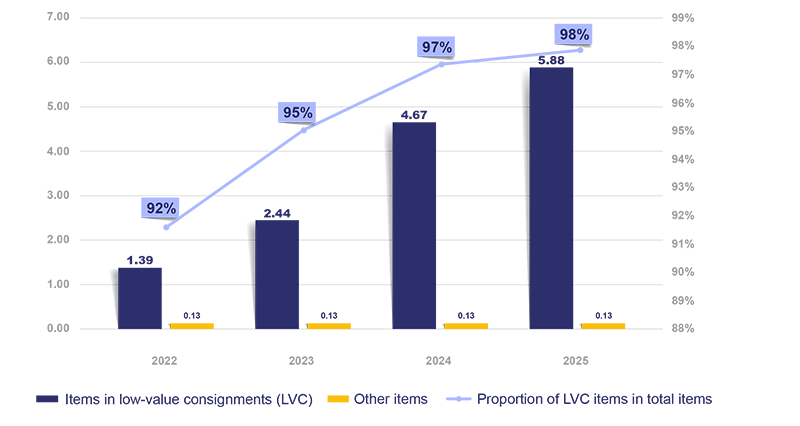
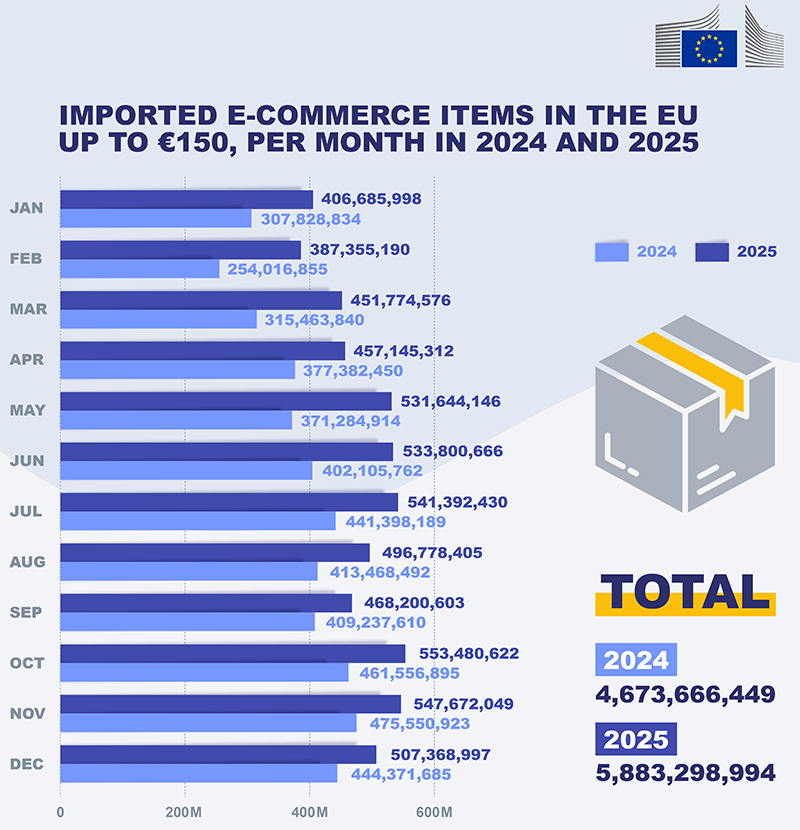
The work of Customs is growing more complex as the sheer scale of challenges expands at an unprecedented pace. Consider these numbers: in 2025 alone, 5.9 billion e-commerce items were imported into the EU. That is over four times the volume recorded in 2022. This presents critical risks: not only an increased chance for unsafe goods or hazardous materials to find their way into the EU market but also increased exposure to practises of unfair competition, for instance through counterfeit goods or mis-declared shipments designed to evade duties.
Furthermore, Customs’ mandate has expanded far beyond revenue collection towards increasingly safeguarding broader social values from sustainability and public health to the rule of law. To this end, EU Customs enforce more than 350 pieces of legislation, from measures to fight organised crime, smuggling, drug trafficking and terrorism, to enforcing sanctions and ensuring products compliance with health, safety, environmental and labour standards. In addition, Customs had to adapt to a variety of new challenges in the past years, like Brexit and COVID.
In light of these expanded responsibilities and the number of cases Customs are dealing with, the limitations of today’s systems become glaring. Effective Customs controls can no longer be performed solely by visual checks, not even with the support of laboratories or certification systems. What efficient Customs controls essentially need is real-time data sharing to identify high risk shipments before they enter the EU market.
The driving forces that are pushing the current model to its limits
In the last years we observed a multiplication of challenges that demand urgent changes.
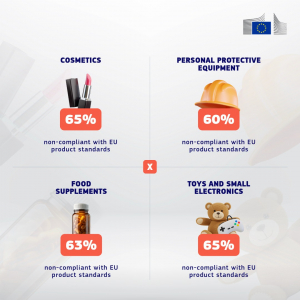
First, the explosion of e-commerce confronts Customs with new financial, counterfeit and compliance risks. Many products fail to comply with EU rules and standards and pose serious safety and security concerns for consumers. Targeted inspections carried out across the EU 27 throughout 2025 in cosmetics, personal protective equipment (PPE), food supplements, toys, and electronics revealed alarming non-compliance: over 60% of checked products failed EU standards due to missing labels, forbidden ingredients, or absent safety documentation. In one of the studies, laboratory tests even found 84% of sampled toys to be dangerous, exposing consumers to risks like unsafe chemicals or faulty designs. Buying cheap might be appealing to consumers in the moment but there is a hidden cost – health hazards and environmental harm. Moreover, these products create an unfair level playing field between EU companies that must apply EU standards and their international competitors that do not necessarily fulfil these requirements. It is important to ensure everyone is playing by the same rules – and the EU Customs Reform will address this.
Secondly, the reality is that EU Customs are not yet functioning ‘as one’ – the Customs Union currently lacks a centralised operational arm. There are 27 Customs authorities, with different control priorities and on-the-ground practices, operating 111 IT interfaces and systems that do not often communicate with each other. This is a situation that can make us more vulnerable to fraudsters who try to find the weakest link. This patchwork approach is also expensive and inefficient. Businesses face between 1 and 2 billion EUR per year in compliance costs.
Third, in an era where data is the new infrastructure, Customs cannot fulfil its expanding role without modern digital tools. We need to fully digitalise our Customs procedures and integrate Customs data in a comprehensive way. The rise of digital tools and AI is a train that we cannot miss-the availability of these new tools could help us change our Customs in an innovative way. The good thing about being in a team is that we can learn from each other. Many EU Member States are already leading on digital systems and developing innovations that can be role models for EU-wide scaling.
The Customs Reform reshapes fundamentally how the EU Customs ecosystem works in order to make it smarter and stronger, more coordinated and more efficient.
Learning from current Customs cooperation networks in Europe
Europe’s Customs landscape is undergoing a significant transformation, driven by digitalisation and the need to future-proof trade. The Union Customs Code (UCC) digitalisation is setting the stage for a fully electronic, data-driven Customs environment.
In preparation of this reform, we have learned from the experience of existing European collaborative platforms like CELBET (Customs Eastern and Southern Eastern European Land Border Expert Team) and EUCABET (EU Customs Alliance for Borders Expert Team), who have laid critical operational foundations, strengthening enforcement and risk management. In the case of CELBET for instance, 11 Member States set up an expert team to build up and strengthen operational cooperation actions at the eastern and south-eastern land border, delivering tangible results from joint risk profiling to using new technologies, while also diagnosing weaknesses that hinder the effectiveness of joint action, such as varying Member State priorities and difficulties in data-sharing. These insights have informed the expansion of cooperation under EUCABET, which has enhanced operational coordination across all EU borders, particularly in combating drug trafficking and e-commerce risks.
Looking ahead, several initiatives, like the forthcoming Product Compliance and Safety Act will further tighten supply chain oversight, while the proposed Single Market and Customs Programme, backed by roughly 3 billion euros, for the customs priority, is expected to fund modernisation efforts, including the the activities to be carried out by the new European Union Customs Authority (EUCA). These reforms need to be seen as pieces of the same puzzle- they represent an overall strategic shift in Europe toward a more integrated, resilient, and tech-enabled Customs Union and towards more cooperation and coordination across countries.
How a data-driven reform is reshaping the future of EU customs
The Customs Reform is a comprehensive modernisation of how the EU Customs ecosystem works and interoperates, introducing a data-driven, digital, centralised system to simplify procedures, enhance risk management, and launching concrete measures that tackle the challenges created by the growth of e-commerce. What is extraordinary about it is that this is a vision that 27 different countries have agreed to implement, a real testament to how the EU works at its best.
An EU-level architecture: European Customs Authority (EUCA) and EU Customs Data Hub
At the head of the reform stands the new EU Customs Authority (EUCA) in Lille, France, which was chosen for the seat, following a competition among nine EU cities. The core task of EUCA will be to manage the EU Customs Data Hub, a centralised platform that will collect, process, connect and store all relevant Customs data at EU-level in one central platform, instead of in the current 111 separated national systems in the 27 Member States.
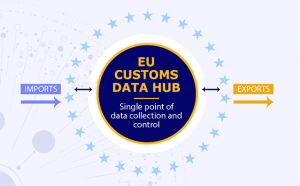 Starting with e-commerce, the Data Hub will become the single digital interface for all Customs data submissions, offering a single, Customs experience no matter where goods cross the border. This means that businesses that want to bring goods into the EU will be able to enter all the necessary information on their products and supply chains in one place, instead of in different national systems and languages. Whether they plan to enter the EU in Hamburg, Antwerp or Algeciras, or use EU ports as transit points, they will deposit their data only once in the EUCA’s data hub. All EU Member States will have access to the same real-time data according to their roles and rights in the Customs processes. Member States’ Customs authorities will see all goods entering the EU and gain a true 360 degrees birds-eye view. With this information and the support of the EUCA, they will be able to carry out more targeted risk assessment and focus Customs checks where they are most needed.
The Data Hub’s true power lies in this ability to transform Customs from a reactive to a predictive force. It will enable cross-referencing trade data with intelligence from OLAF (the EU’s anti-fraud office), EPPO, and market surveillance authorities to help improve the flagging of high-risk shipments before they arrive at European borders. Analytical tools such as machine learning algorithms can help identify patterns, such as suspicious routing, undervaluation, or links to known fraudsters. The system will track “data events” rather than static declarations-recording when an order is placed, when a shipment is loaded, when goods are released-providing a dynamic, end-to-end view of trade flows instead of today’s more fragmented situation where data is largely stored in separate declaration-specific silos. This approach will be particularly transformative for e-commerce, where the current system is particularly overwhelmed.
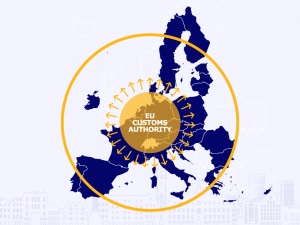 Thanks to the EUCA, for the first time we will have a true EU-level risk analysis, which will ensure common priorities for controls and a common assessment of emerging risks and threats. Many of today’s challenges are cross-border in nature and the EUCA will support Customs authorities in addressing them even more effectively. When high-risk shipments are identified, the EUCA will coordinate joint operations across member states, enabling them to act as one rather than 27 separate entities. This approach will be particularly valuable in combating cross-border threats like trafficking in illicit goods or other activities that exploit differences between national systems.
EUCA’s creation marks a significant evolution in EU Customs governance as it will establish central coordinating capacity to support national Customs administrations. At its cruising speed, 300 staff members will work jointly to support the Member States in making EU Customs smarter, faster, safer, more uniform, and more capable of handling modern global trade flows. EUCA will not replace national Customs administrations. It is designed to act as an enabler and national Customs authorities will retain operational autonomy and remain responsible for the implementation of the Customs legal provisions but benefiting from EU-level coordination and shared analysis. The new agency will empower the collective work of EU’s Customs through shared experience, intelligence, coordinated operations, and advanced analytical tools deployed in the Data Hub. The governance and operational functioning of EUCA will rely on the Member States, who represent their countries in the EUCA Management Board. The agency will be headed by an executive director – yet to be selected.
Next steps
The EUCA will be established in close cooperation with the Member States, with some activities commencing in 2027, and with the launch of the Data Hub’s first focus on e-commerce in 2028. The full deployment of all aspects of the reform for all forms of trade will be done by 2031 at the latest. All traders will have the opportunity to operate under the full new UCC framework by that date if not earlier. This framework will become obligatory for all soon after. From that point on, trade will interact with Customs only through the hub. This will result in a very important simplification for businesses and Member States’ Customs authorities. The estimated saving for them is more than 2 billion euros a year in IT development and maintenance costs. It will redefine the way information is provided, used and shared, drastically reducing compliance costs for all businesses. It will moreover allow new facilitations for trustworthy “Trust & Check” system, including the possibility to “self-release” goods on behalf of Customs.
Shared priorities for the future of Customs: UCC reform and WCO modernisation
The EU’s Union Customs Code (UCC) reform excels in reflecting the World Customs Organization’s core objective of driving Customs performance through data-based Customs modernisation globally and including the WCO organisation itself. The UCC reform directly supports this and further WCO goals thriving towards digitalised, data-supported and simplified Customs processes, enhanced data-driven risk management and strengthened supply chain transparency. In doing so, the EU is aligned with the key pillars of the WCO’s mission to ensure that global Customs remain fit for purpose in an era of rapid technological and economic change, further challenged by geo-political disruption.
The EU’s ambition to advance Customs performance innovation and modernisation also globally is further very visibly reflected in its unwavering promotion of a substantial Harmonized System (HS) modernisation, that addresses gaps in classification, sustainability, and emerging technologies. This will ensure that the HS remains a relevant tool for global trade, which helps simplify the tariff classification of goods and aligned with current global trade patterns. The EU is in this way not only aligning with the WCO’s strategic direction but also providing a blueprint for Customs innovation, and in this example even a practical model for how Customs can support a more resilient, transparent, and trade-facilitating global HS. One thing is sure: global Customs collaboration will be essential for the EU Customs reform’s long-term success.
A global blueprint for Customs modernisation
While the EU’s Customs Reform is tailored to its specific challenges, the underlying principles have global relevance. For the WCO’s 187 members, the European experience offers valuable lessons about how to modernise Customs in the digital age, and even more so in the specific context of other regional Customs unions that are similar to that of the EU.
The EU’s approach for a phased implementation could provide a model for other regions and similar Customs unions. By starting with e-commerce, the most pressing challenge, and gradually expanding to other sectors, the reform also minimises disruption while building momentum. This incremental strategy allows businesses and Customs authorities to adapt to the new system without overwhelming them.
Perhaps most importantly, the EU’s experience demonstrates that Customs modernisation does not require sacrificing national sovereignty. The EUCA and the Data Hub are designed to enhance rather than replace national Customs administrations, reinforcing them and the EU Customs Union with tools, intelligence and capacities. This model of cooperation, balancing centralisation with individual autonomy could be particularly valuable for other regional blocs.
In today’s high-speed multiplayer global trade arena, the Customs Reform redefines both the roles of the players and the rules of play – from Customs authorities and businesses to online platforms and consumers themselves. The objective is no longer simply to react, but to anticipate and adapt, as we continue shaping a Customs Union fit for the next level of challenges.
More information
Commission welcomes historic agreement to reform EU Customs Union https://ec.europa.eu/commission/presscorner/detail/en/ip_26_735
EU Customs Reform – Taxation and Customs Union – European Commission
https://taxation-customs.ec.europa.eu/customs/eu-customs-reform_en