

The recent seizure of 551 kilograms (kg) of cocaine in an aircraft which had landed on a makeshift airstrip underscores the critical role of Belize Customs in the national architecture established to monitor the movements of general aviation (GA). It also highlights the importance of proactive intelligence gathering, operational coordination, and strong partnerships among national and international agencies.
On 10 April 2026, Customs officers from the Intelligence Unit were on patrol in the Neuland area, a recognized high-risk smuggling corridor in the northern region of Belize, when they detected an individual who had earlier evaded the control of a Customs mobile patrol.
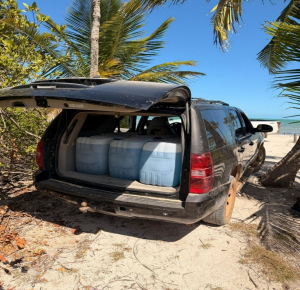
They decided to proceed towards a secluded coastal strip of land large enough for a small plane to land. Here they found the suspect, as well as other individuals, a vessel, and a sport utility vehicle loaded with suspected aviation fuel. A tactical search of the individuals and the vehicle led to the seizure of communication devices, including cellular phones, a satellite phone, a walkie-talkie, and a firearm.
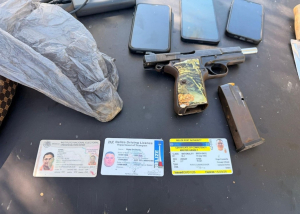
After seeing a vessel approaching, the officers decided to withdraw, requesting reinforcement from the Belize City Customs Enforcement Unit and the Police’s Anti-Narcotics Unit. In the meantime, the individuals attempted to get rid of the fuel and to destroy other potential evidential material by setting fire to the vehicle used in the operation. However, as their communication devices had been seized, they were unable to communicate with their partners in crime.
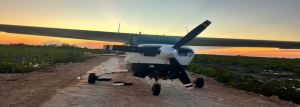
When the aircraft they were expecting landed, the required reinforcement had arrived. They arrested the individuals found on the site, as well as the pilot, two Mexican nationals and two Belizean nationals, and seized approximately 551 kg of cocaine, as well as the aircraft used in the operation.
Ideal transit country
This modus operandi is well known and is not specific to Belize. However, the country’s geographic position in Central America, combined with its extensive coastline and sparsely populated rural areas, makes it an ideal transshipment point for criminal organizations trying to move drugs destined for larger markets in North America and other regions. Narcotics, as well as weapons, currency and other illicit goods, are moved by sea, land and air, sometimes combining all modes of transport. These operations are often supported by local ground crews who arrange and manage fuel supply, communications, transportation logistics, security, and the swift offloading and movement of contraband.
The aircraft used belong to a category called “general aviation” (GA), which encompasses all civil aviation activities except scheduled commercial airline services and military aviation. In Belize, GA activities include private aircraft operations, charter flights, agricultural aviation, tourism-related flights, and other non-commercial aviation activities. To enable administrative authorities to exercise control over international movements of GA aircraft, Belize legislation requires certain documents to be provided in order for these aircraft to be able to land in the territory, such as the flight plan, documents on the status of the aircraft, documents on the goods being transported, and documents relating to the persons on board and their luggage.
However, criminals exploit the flexibility offered to GA operators and the ability of experienced pilots to take off from, or land on, a stretch of flat ground or remote roads a few hundred metres long and a few dozen metres wide to evade traditional border control mechanisms. Makeshift airstrips are usually situated in isolated areas where communications infrastructure, surveillance coverage, and rapid law enforcement response capabilities remain limited due to their difficult access, particularly at night or in adverse weather.
Controls are further complicated by the mobility and increasing adaptability of organized criminal groups, who continually modify their operational methods, routes, landing sites, communication techniques, and logistical support systems to evade detection. Small aircraft engaged in illicit activity can enter Belizean airspace quickly, land within minutes at improvised locations, offload contraband, and depart before authorities can mount a coordinated interception. Ground support teams operating in these areas are often well-versed in the topography of the area, highly organized, and equipped to rapidly transport narcotics, aviation fuel, and communication equipment away from landing sites immediately after an aircraft lands.
Intelligence collection, interagency coordination, mobility, and capacity building
Criminal organizations’ activities not only threaten border security, but also pose broader risks to governance, public safety, economic stability, and institutional integrity. The presence of high-value narcotics trafficking operations increases the risk that foreign criminal organizations and cartels will expand their influence closer to Belize and attempt to establish logistical networks, local support structures, corruption channels, and operational footholds within the country.
Unlike larger countries with extensive radar coverage and dedicated aviation interdiction infrastructure, small developing states such as Belize must meet significant operational demands with limited resources. Monitoring vast coastlines, remote terrain, and multiple potential landing corridors simultaneously requires sustained intelligence collection, interagency coordination, mobility, and specialized operational planning.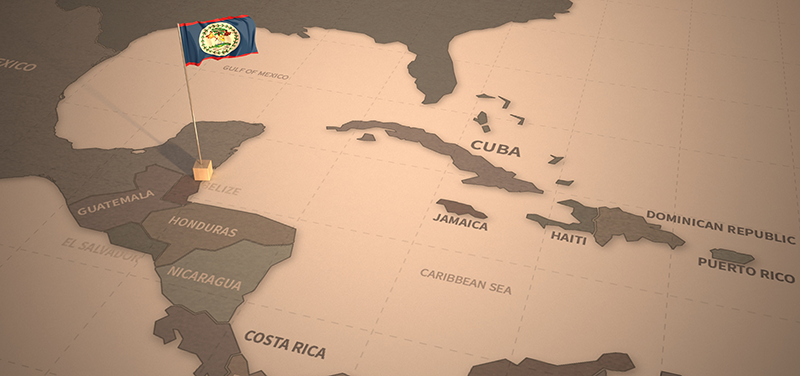
Operation coordination among national and international partners
The monitoring of the cross-border movements of GA is a joint undertaking involving the Belize Customs and Excise Department (BCED), the Belize Civil Aviation Authority, the Belize Police Department, the Joint Intelligence and Operations Centre (JIOC Belize), and other national security agencies.
JIOC Belize plays a critical role in coordinating intelligence, operational communications, and interagency collaboration among law enforcement and security stakeholders. Aircraft involved in illicit trafficking often originate outside Belize, transit multiple jurisdictions, and are part of larger regional trafficking operations linked to organized criminal groups operating across Central America and beyond. The JIOC complements Belizean capacities to monitor air traffic through international cooperation. The JIOC receives information on suspicious aircraft movements from partners such as the United States Joint Interagency Task Force South, which has access to satellite surveillance tools to identify and track suspicious activities.
The BCED is actively participating in this architecture, exchanging and receiving intelligence, and coordinating operations. This collaborative approach has significantly improved Belize’s ability to monitor high-risk areas, identify high-risk movements, and enable rapid enforcement responses.
Specialized training
Detecting suspicious GA activity requires officers to analyse flight behaviour, logistical indicators, communication patterns, fuel movements and intelligence from multiple domestic and international sources. This work demands analytical capacity and access to timely intelligence.
To strengthen the skills of its officers, the BCED engaged with the WCO Synthetic Drugs Detection Project (SDDP) which organized specialized training to strengthen analytical thinking and operational decision-making capacities among frontline officers and intelligence personnel. The WCO experts shared practical knowledge on intelligence development, risk management, targeting methodologies, and interagency coordination. Case studies were also used to deepen the officers’ understanding of how criminal organizations exploit vulnerabilities in aviation systems to facilitate illicit trafficking.
One of the most important lessons from the WCO training was the need to prioritize proactive intelligence gathering over reliance on reactive enforcement measures. Officers were encouraged to focus on behavioural indicators, unusual flight activity, logistical anomalies, suspicious fuel movements, communication disruptions, and coordinated targeting operations to identify high-risk activities. The training significantly influenced the way frontline officers carry out controls related to general aviation. Participants received specialized instruction on how organized criminal groups exploit this mode of transport, as well as on risk indicators, aircraft inspection techniques, and methods to strengthen the monitoring and control of suspicious flights, crews and passengers. The knowledge and operational techniques acquired during the training were directly applied during the operation, leading to the interception of the aircraft mentioned at the beginning of this article.
Way forward: enhancing communication and monitoring systems
Enhancing enforcement capacities further requires sustained investment in aerial and coastal surveillance technologies to expand monitoring coverage across remote and vulnerable areas frequently exploited by organized criminal groups. Greater access to real-time aviation intelligence databases and improved information-sharing systems would significantly enhance Belize’s ability to identify suspicious flight activity, track high-risk movements, and coordinate timely operational responses.
Strengthening communication systems for remote operations is also critical, particularly in isolated coastal and rural areas, where enforcement personnel often struggle to maintain secure, reliable communications. Continued and sustained investments in drone surveillance and other advanced monitoring tools would provide additional operational benefits by enhancing reconnaissance, situational awareness, and evidence collection in challenging environments.
The BCED also recognizes the need to expand interagency operational training exercises to improve coordination among Customs, law enforcement, military, and intelligence agencies during high-risk interdiction missions. Activities aimed at exposing enforcement officers to international best practices, with the support of international partners such as the WCO, will continue.
More information
Contact the author
Contact the WCO SDDP Project