
Customs as a shield against a wide range of threats
Customs administrations collectively are entrusted with the regulatory management of the flow of global trade and are expected to support multiple governmental imperatives simultaneously: border security, revenue collection, economic growth, and societal protection.
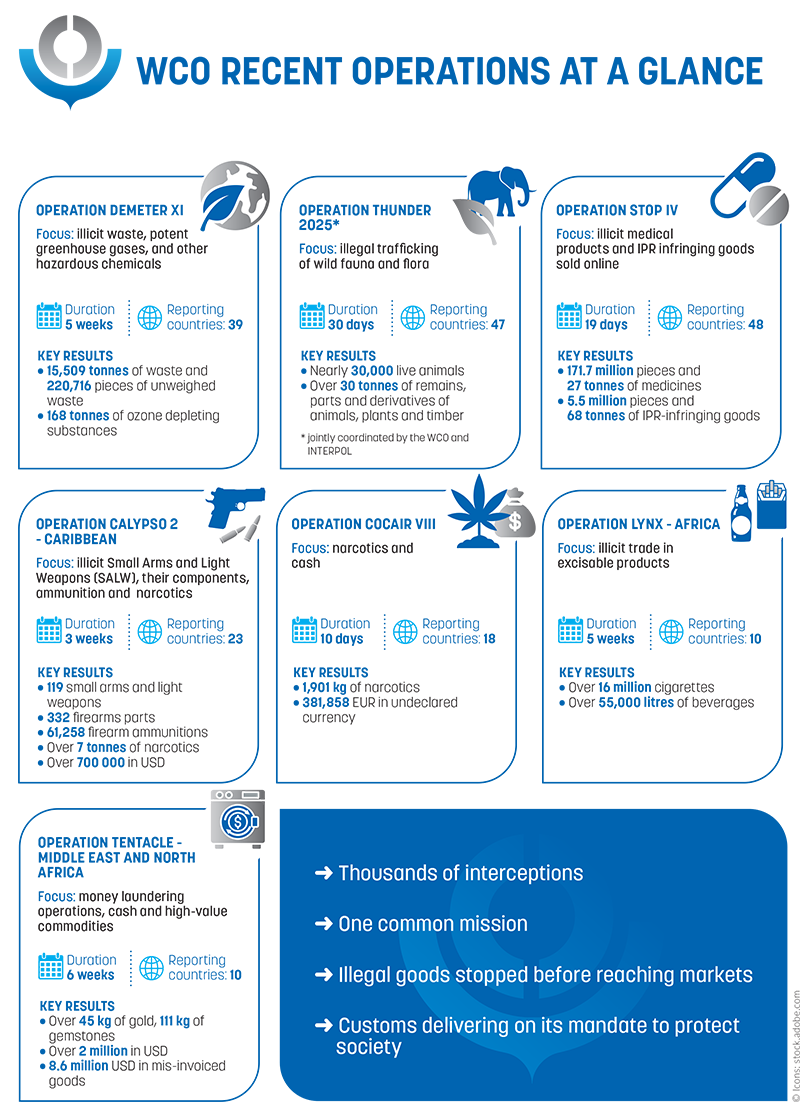
The results of recent WCO enforcement operations, all of which address the substance of the theme, are both encouraging and alarming. From one perspective, they can be explained by increased enforcement capacities and vigilance; however, they also reflect a challenging reality: all modes of cross-border transport and the very infrastructure of trade continue to be used and abused by criminal networks to illicitly move goods, people, wildlife and money.
The WCO’s operations enable participants to take stock of the efficiency of procedures and work practices, exchange in real-time information on suspicious shipments and seizures, and identify trends and modus operandi by analyzing information reported by others.
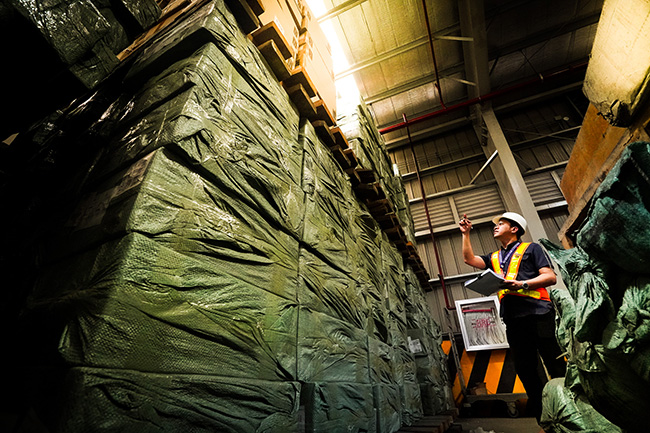
Some smuggled commodities are of increasing concern. Synthetic opioids, notably “fentanyl”, “nitazenes” and their analogues, are the most significant emerging drug threat due to their high lethality in very small quantities, rapid chemical adaptation to circumvent controls and increasingly sophisticated supply chains. Within the small arms and light weapons domain, the rise of modular weapon systems presents another significant enforcement challenge. A related issue is the trafficking and diversion of drone components, including dual-use electronics, navigation modules, optics, communications equipment and power systems.
Data and intelligence sharing matters more than ever and must be a collective endeavour
Understanding how criminal networks work, what they trade and how they illicitly move goods is critical to detect and deter these activities. To face this challenge, the WCO has put at the disposal of its Members several applications to support information collection and sharing.
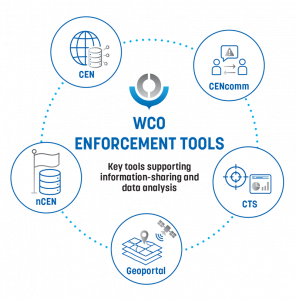
These include the Customs Enforcement Network (CEN) Suite, comprising the CEN application itself, the CEN Communication Platform (CENcomm) and the national CEN (nCEN).
As the forerunner, the CEN is, at its core, a database of seizures and offences as well as images. In many instances, consulting the CEN has led to the identification of Customs violations. The operational exploitation of CEN data is also reflected in the activities of the Regional Intelligence Liaison Office (RILO) network. On average, around 100 intelligence alerts are shared annually by RILOs through the CEN, based on the analysis of enforcement data and regional intelligence.
The WCO continues to encourage WCO Members to contribute more to the CEN database, both in their own interest, and to strengthen the global Customs community. Having CEN as a resource alone isn’t enough; convincing Members to make optimal use of it is essential. To showcase the value of the CEN, and ultimately the value of the data itself, as well as to support Customs administrations that lack the analytical capability required to process the data contained in the CEN in a meaningful way, a data visualization feature has been introduced. This feature enables the transformation of complex CEN datasets into visual outputs, supporting trend analysis, route identification and strategic briefings at national, regional and global levels through interactive dashboards.
Complementing the analytical strength of the CEN, CENcomm underpins the operational dimension of the work carried out by Customs and law enforcement agencies. This secure, web-based system allows closed groups of officers to exchange messages and share information in real time for the duration of an operation or project. We just completed a major modernization of CENcomm, transforming it into a more intuitive, secure and effective tool. The upgraded platform offers enhanced collaboration features, real-time geolocation to support the more precise identification of seizure locations and trafficking hotspots, improved data exchange functionalities and a modern interface accessible across devices.
Closing data collection and analysis gaps is crucial for our success
Aware that some Members did not have any application to collect, store, analyse, and disseminate law enforcement information efficiently in order to establish robust intelligence capabilities, the WCO developed in 2013 the national Customs Enforcement Network (nCEN). Today, the nCEN has been deployed in 59 countries and, in places where data is systematically reported, its deployment improves targeting capacities.
There is also the Cargo Targeting System (CTS), which enables risk management through the analysis of electronic cargo manifest, bill of lading and air waybill data and has been deployed in 26 Member administrations. Preparations are under way for a regional deployment in seven Central African countries, financed by the European Union.
Since 2022, the WCO has hosted a collaborative geospatial data platform, the WCO Geoportal. The platform supports user-contributed data and the integration of external geospatial datasets, and its data can be incorporated into local geospatial workflows. Developed for the participants in the WCO COLIBRI Project, which has been funded by the EU to help administrations responsible for enforcement implement effective controls in general aviation, it is today a multi-project platform with the potential to support additional projects that can benefit from the use of geospatial data.
The WCO’s support to Customs analysis has been taken further in recent years with the development of initiatives aimed at enabling Members to better understand the potential of artificial intelligence (AI) and machine learning (ML).
To help close the gap between administrations in these areas, while acknowledging that technology deployment must remain Member-driven and sensitive to operational realities, WCO Members contributed to a comprehensive set of resources under the Smart Customs Project, funded by China Customs. Leveraging these resources, regional and national workshops are regularly held to develop recommendations and roadmaps with participants.
Additionally, under the BACUDA Project, funded by Korea Customs, Customs-specific algorithms in open-source programming languages have been developed and a scholarship programme has been created to enable Customs data analysts to spend three months in Korea to deepen their knowledge about practical applications of AI in Customs administrations, data visualization and data storytelling – understanding how to communicate findings effectively is just as critical as the data analysis itself.
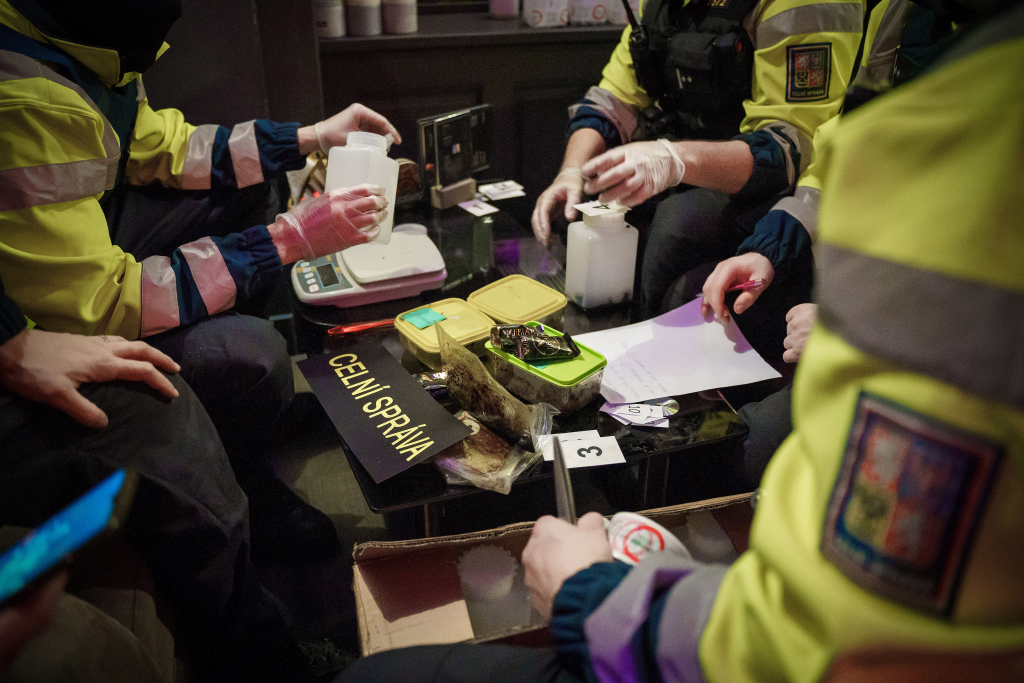
Customs must mobilize to counter the exploitation of general aviation by traffickers
Several years ago, the Organization began work on general aviation, recognizing it as a vector exploited by criminal networks. Two WCO enforcement initiatives – the COLIBRI Project and the Synthetic Drugs Detection Project (funded by the US Department of State)[1] – aim to address this threat by working with Members to improve risk assessment, strengthen operational readiness at general aviation airports, and enhance cooperation between Customs services, civil aviation authorities, and law enforcement agencies.
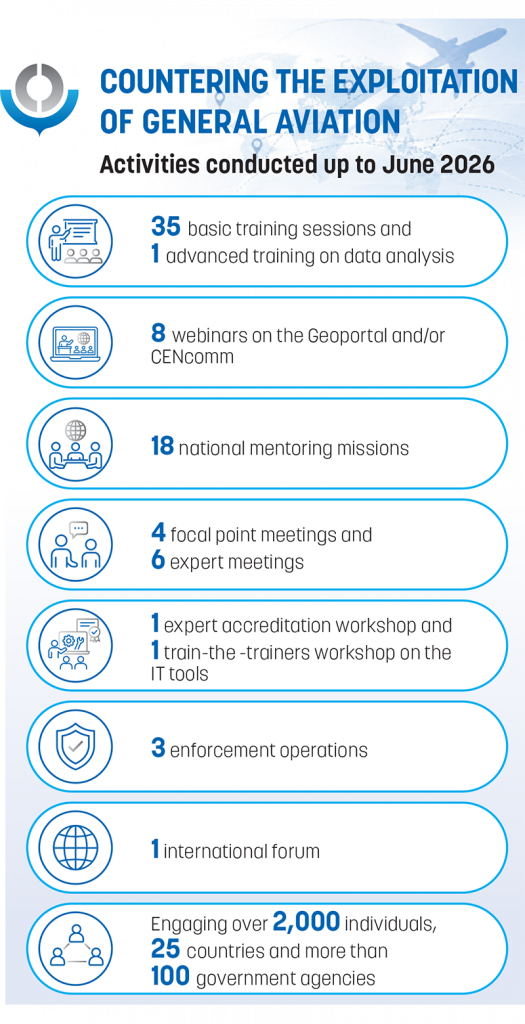
According to a survey just conducted, the 16 Customs administrations participating in the COLIBRI Project indicated that it has elevated general aviation control from a peripheral activity to a structured, intelligence-driven, and internationally coordinated enforcement domain. Many administrations now use the WCO Geoportal in daily operations, and some are developing national platforms to receive flight General Declaration data in advance, develop clear indicators of growing digital maturity and implement improved pre-arrival risk analysis.
These projects also contributed to the development of new risk indicators for general aviation that have been included as a new chapter in Volume 2 of the WCO Customs Risk Management Compendium.
Profiling postal and express consignments must become a core Customs competency
In line with e-commerce being a focus area in its Strategic Plan, the WCO has undertaken work to improve Customs’ enforcement posture in the postal and express environment. Risk indicators have been updated and refined thanks to the input of experts from Customs, WCO, INCB and UPU, who have been working together to identify ways to strengthen operational responses to synthetic drugs trafficking through mail and express channels.
Data from the CEN shows that the number of cases of New Psychoactive Substances reported in 2025 doubled to 7,721 cases (+108.8%) compared with 2024 and that 78.9% of the seizures concerned postal shipments. But NPS and drugs in general are not the only commodities moving in postal and express consignments. This mode of transport accounts for 44.8% of all cases reported in the CEN.
These findings can be explained in part by the fact that WCO flagship enforcement operations focus on these modes of transport; they also underscore the importance of Customs developing specialized risk profiling capacities across a wide range of commodities.
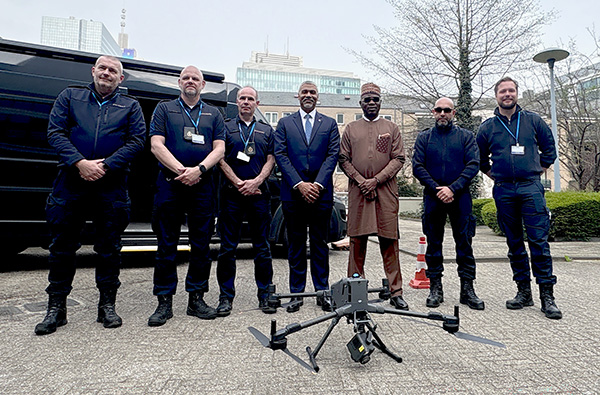
Developing capacities to use geospatial intelligence (GEOINT) is another promising area of work
A new body of knowledge – almost a discipline in itself – GEOINT combines satellite imagery, geographic information systems (GIS), remote sensing, positioning data and analytics to provide a visual representation of geographic features, activities and changes over time. It does not replace human expertise or inter-agency cooperation; it augments them, providing a single geospatial framework where agencies can overlay data, coordinate responses and target resources more effectively.
To support administrations utilizing GEOINT, the WCO has created a pool of officers able to train their peers on GEOINT through the Master Trainer Programme, an initiative funded by the Japan International Cooperation Agency (JICA). So far, the pool counts 15 trainers from WCO Members in Africa who are equipped to integrate GEOINT into Customs operations in their respective countries. In addition, a further 28 officers are undergoing training and are expected to qualify as Master Trainers by June 2027. The WCO Geoportal has been made available to all participating administrations, and several have today established dedicated GEOINT units or are in the process of doing so.
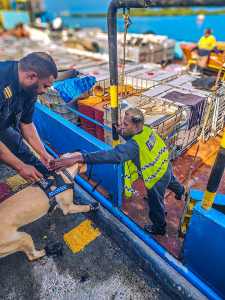
Interagency cooperation is one line of engagement that must continue
The challenges that we face are bigger than any one of us, no matter where we are from. Customs cannot be successful if it sees itself as having to manage threats alone. All WCO capacity building activities have increasing cooperation at the national and international levels at heart, and many are conducted with the technical support of our partners. Training, workshops and enforcement operations often bring together Customs, relevant national agencies, industry stakeholders, and international and regional organizations such as INTERPOL, the Secretariats of the Multilateral Environmental Agreements, the Universal Postal Union (UPU) and the International Narcotics Control Board (INCB) to ensure a comprehensive and cohesive approach to combatting specific threats or challenges.
Evaluation of key programmes and initiatives shows that Customs, Police, Tax authorities, Financial Intelligence Units, and other specialized agencies are working together more systematically and cultivating stronger relationships to protect society – using the combination of Customs presence and experience and the expertise and authorities of other agencies to more effectively stop transborder criminality.
Telling the story of Customs protecting society
For Customs to receive the support it deserves, we need to collectively highlight the decisive and vital role Customs plays. In telling the world how we are helping to deliver greater efficiency, security, and prosperity, we create the possibility of greater understanding, greater appreciation, and greater investment.
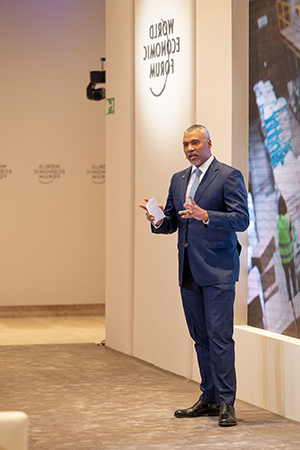
As Secretary General of the WCO, one of my goals is to raise awareness of why Customs matters and I have engaged with several media in recent months to explain that, beyond collecting revenue, Customs protects the safety, security and well-being of our societies – every single day.
This edition of the magazine also forms parts of these efforts, and I am appreciative of the many Customs administrations who contributed to this edition. Telling their story in the June 2026 edition of WCO News was one of the tangible actions I asked WCO Members to take in line with our theme. I am pleased so many of them responded to the invitation and have offered glimpses of Customs protecting society through vigilance and commitment.