In 2025, the State Customs Service of Ukraine recorded 1,173 attempts to import narcotics, psychotropic substances and precursors illegally. Of these, 626 were detected by one of the Service’s 86 canine teams. The teams also helped uncover other types of illicit goods, with 246 seizures involving weapons, currency, tobacco products and amber made with their support.
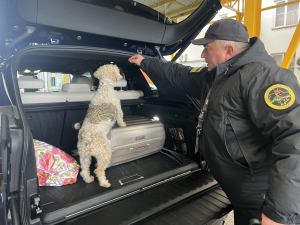 These results testify to the value of working with detector dogs and to the expertise acquired by Ukraine Customs in this field. Well-trained dogs can conduct “incorruptible” olfactory inspections of vehicles and individuals and identify target odour molecules within seconds, even at minimal concentrations and even when prohibited items or substances are hermetically sealed to neutralize scent or masked by competing odours.
Ukraine Customs has worked with detector dogs since 1994, when a Canine Centre was established at the Black Sea Regional Customs office in Odesa. At the time, due to its geographical location, Ukraine had become a transit territory for significant quantities of raw narcotic materials, and the deployment of the first canine teams supported drug enforcement efforts.
The Centre was designed for the simultaneous training of 12 to 14 inspector-dog handlers and their service dogs. In 2010, it was relocated to the Ukraine Customs educational institution providing advanced training for employees, located in Khmelnytskyi. Service dogs are selected according to strict requirements relating to age (4 to 18 months), sensory capabilities (smell, hearing and sight), personality (innate drive for play) and behaviour (for example level of obedience or appropriate response to loud noises and external stimuli). Qualities and behaviour are assessed at the start of primary training through eight basic exercises.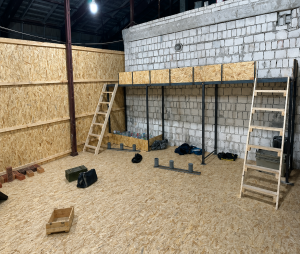
Customs officers wishing to become dog handlers must also undergo a selection process aimed at assessing their knowledge of Customs legislation, regulations and procedures relating to canine teams, as well as protocols for service dog maintenance and care. Candidates must be able to assess a dog’s health based on external signs, distinguish between non-infectious and infectious diseases, provide first aid and take measures for the prophylaxis and prevention of the spread of infections.
The vast majority of canine teams are trained for dual specialization. Trainers use a hand-held signalling device called a clicker, which emits an audible “click” when pressed, to train dogs to adopt specific behaviours, develop stable search and detection skills and obey handlers flawlessly. Handlers learn not only how to work with service dogs, but also how to care for them. Working skills are honed to the point of automatism through practice once the canine team begins operational duties. They undergo regular retraining and benefit from the support of a network of regional trainers. It takes about 4,400 hours on average to train a canine team over the course of its 10-year career. Each canine team is unique, and the primary challenge is to develop a tailor-made competency development programme for each one.
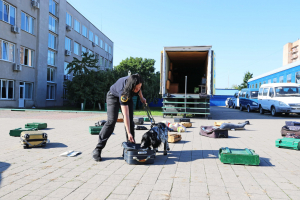 Trainers also provide practical assistance to Customs offices in strengthening control measures and implementing canine team deployment methodologies. The use of dogs for optimum performance requires the ongoing education of units that need the support of a dog handler team. They must understand what the dog can achieve, how best to use it – for example how to design the search area to allow optimum access to targeted articles, areas or people so as to give the dog the best chance of success – and the support required before, during and after deployment.
The Canine Centre also administers and maintains the “Canine Services” information system. This software records data relating to the teams’ training, operational performance and participation in organized events. Access to this information is restricted to officials within the canine units. The system also contains information regarding the activities of canine units from other Customs administrations, collected from open sources and through communication during events.
It is worth noting that, due to the suspension of air and sea traffic, as well as the closure of checkpoints in high-risk directions following the full-scale invasion of Ukraine by the Russian Federation, some Customs canine units have been redeployed to the western borders. Currently, all these units are involved in Customs control procedures at railway and road checkpoints, as well as at international mail exchange facilities.
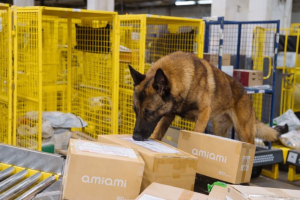 Many canine handlers are currently defending the State within the ranks of the Armed Forces of Ukraine. The canine training programme is, however, constantly being improved through the integration of modern security solutions and expanded cooperation with Ukraine’s law enforcement agencies to exchange expertise and best practices, and even provide training for their canine teams.
In 2016, the WCO granted the Ukrainian Canine Centre the status of WCO Regional Dog Training Centre (WCO RDTC). Since then, canine teams from Poland and Slovakia have visited the centre for training, and participation in international forums has increased, with Ukrainian experts taking part in 40 in-person and online events aimed at sharing experience and lessons learned. Notably, throughout 2025, a series of intensive exchanges took place with colleagues from Slovakia, Poland, Romania and Moldova, alongside active participation in WCO canine-related initiatives. This active international engagement has enabled the implementation of new training tools designed to replicate actual operational environments, such as sound and light distractors, as well as new training methods such as clicker training, and new methodologies relating to service dog recruitment and accreditation protocols, for example.
Ukraine Customs is also actively engaged in the work of the WCO. It contributed to the development of WCO accreditation standards for RDTCs and is currently examining the content of the WCO Compendium for Customs Canine Programmes: Best Practices and Guidelines to enhance its programme further.
More information
https://dspkz.customs.gov.ua/
ds.post@customs.gov.ua