Despite the efforts made to enhance integrity, there remained a need systematically to measure what was being implemented. While progress was visible, the ZRA decided to continue pursuing a comprehensive framework to assess how integrity was perceived internally and externally, and how reforms translated into measurable outcomes.
In 2018, the ZRA engaged with the WCO Mercator Programme,[3] designed to assist governments in implementing the Customs trade facilitation measures outlined in the WTO Trade Facilitation Agreement (TFA). Part of the technical support provided by the WCO was delivered under a partnership with the WCO Accelerate Trade Facilitation Programme, funded by the United Kingdom’s His Majesty’s Revenue and Customs (HMRC). The two partners initially focused on developing capacity to conduct WCO Time Release Studies (TRS), streamlining air cargo and expedited shipment operations, improving coordination with other agencies at the border, enhancing risk management, launching an Authorized Economic Operator (AEO) programme and modernizing the post-clearance audit (PCA) function.
 From 2021 onwards, the work plan evolved to include integrity-related measures as a key enabler of the broader reform process. The objective was to enable ZRA Customs to move from fragmented initiatives to a more structured and programmatic approach aligned with the WCO Revised Arusha Declaration on Integrity in Customs. The approach was supported by a strong National Anti-Corruption Strategy, institutional leadership and political commitment. The President of the Republic of Zambia, His Excellency Mr. Hakainde Hichilema, established a “zero-tolerance” stance on corruption, declaring shortly after his inauguration in August 2021 that “The scourge of corruption has not only eroded our much-needed resources, but it has also robbed us of the opportunity for growth. We shall have zero tolerance for corruption. This will be our hallmark. The fight against corruption will be professional and not vindictive.” He further asserted that “We need ethical and servant leadership at all levels of society. We need morality, integrity and accountability.”
A comprehensive data-driven action plan
This shift was anchored in the creation of an Integrity Technical Working Group (TWG), responsible for conducting internal corruption risk assessments and engaging stakeholders within Customs. In March 2022, the TWG took part in a comprehensive integrity diagnostic exercise and facilitated the conduct of a Customs Integrity Perception Survey (CIPS), a tool developed by the WCO to measure integrity behaviours and perceptions among Customs officials and private-sector stakeholders.
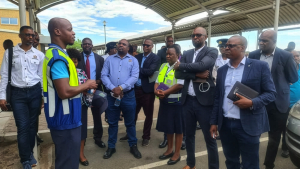
The CIPS concluded in August 2022, with 592 Customs officials and 638 private-sector representatives responding to the survey. In October, the TWG and WCO integrity experts from Türkiye and Pakistan met to review the survey results, conduct the assessment and develop a Comprehensive Integrity and Anti-Corruption Action Plan (2022-2024). Field visits to Lusaka Port and Kenneth Kaunda International Airport (KKIA), as well as meetings with relevant parties, enabled the TWG to collect the views of key stakeholders.
The final plan contained more than 33 specific actions and 100 sub-actions across key areas such as transparency, automation, audit and stakeholder engagement. The plan adopted a preventive, systems-based approach, addressing the root causes of corruption through process simplification, automation and strengthened oversight. It also emphasized collaboration with the private sector and other government agencies. To date, 26 actions and 52 sub-actions have been fully implemented, while six actions and 15 sub-actions have been partially implemented.
Embedding integrity through legal and regulatory reforms
One of the most significant aspects of the ZRA’s integrity journey has been the translation of policy objectives into legally binding requirements. A major milestone was the enactment of the new Border Management and Trade Facilitation (BMTF) Act No. 8 of 2025. The BMTF Act reduced officers’ discretionary powers by automating procedures and decision-making processes and by providing an electronic audit trail for all processes and decisions.
It introduced:
The development of the BMTF Act was informed by practice, including work carried out to enhance coordinated border management at key border posts such as Chirundu and Kazungula, with support from the World Bank. This demonstrates a clear link between technical assistance, policy development and legislative reform.
The WCO’s support guided the development of an Inter-Agency Standard Regulation (Framework) on coordinated border management and led to a comprehensive data requirements harmonization exercise. This included the mapping of 54 clearance-related documents across 18 agencies, representing 973 data elements, a substantial proportion of which has already been harmonized and aligned with the WCO Data Model to enable connectivity among agencies’ IT systems. This work provided the technical foundation for a paperless, integrated border environment, reducing duplication, limiting manual intervention and strengthening data integrity. To sustain momentum in coordinated border management, a dedicated working group has been established under the National Trade Facilitation Committee (NTFC). Ongoing efforts focus on finalizing inter-agency coordination frameworks, developing implementing regulations and advancing digital solutions, including new system modules enabling agencies without IT infrastructure to participate fully in automated processes.
Rewarding and protecting whistleblowers
Another regulatory milestone was the amendment of the ZRA Act (Act No. 26 of 2023) which introduced provisions for whistleblower rewards and protection in order to encourage the reporting of tax evasion. Supporting this, the ZRA Whistleblower Reward Regulations (2024) and related guidelines have been developed and are pending approval. The ZRA also aligned its Code of Ethics with the WCO Eastern and Southern Africa (ESA) Regional Code of Conduct in order to align the Code with regional and international best practices.
Strengthening digitalization and automation
Following the introduction of electronic payment systems, the available payment methods were expanded, eliminating the need for cash transactions at Customs offices by 99.97%.
With support from the WCO, the ZRA aligned air cargo procedures with the WCO Immediate Release Guidelines and TFA Article 7.8 on expedited shipments. This work prepared the way for the integration, in November 2023, of an air cargo module (ASYEXPRESS module) into the ASYCUDA World system, enabling the automated declaration and clearance of different categories of air cargo. Since its rollout in 2024, the system has drastically improved efficiency: approximately 300 daily courier parcels that previously took more than 24 hours to clear are now processed within around two hours, representing a 97% reduction in clearance time.
The e-bond management module of the Zambia Electronic Single Window (ZESW) has also been enhanced with additional functionalities, and several other automated systems have been developed to process release orders, Customs temporary export permit applications, rules of origin certificates and passengers’ Customs declaration forms. They follow the same principle: simplify processes, reduce discretion and enhance traceability.
Centralizing complaint handling
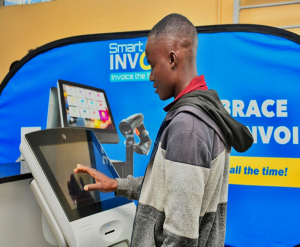
A Customer Relationship Management (CRM) system was deployed in 2023 to centralize complaint handling, enabling better tracking, analysis and resolution of issues. This system provides management teams with real-time insights into potential integrity concerns and service delivery challenges. Training programmes on ethics and integrity-related risks have also been expanded, with a focus on line managers and front-line staff.
Collaboration with external institutions such as the Office of the Public Protector has further strengthened accountability mechanisms. A Memorandum of Understanding signed in July 2024 provides both staff members and stakeholders with an alternative external mechanism for reporting complaints, in addition to the existing internal mechanisms within the ZRA, thereby enhancing transparency and trust.
Engaging with private-sector stakeholders
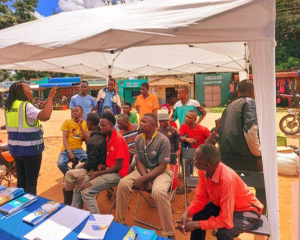
Recognizing that integrity is a shared responsibility, the ZRA used the momentum created by the CIPS to integrate consultation with the private sector and stakeholder engagement into key processes. Clearing agents and industry associations have been consulted on proposed reforms, and their feedback has been used to refine policies and procedures. For instance, stakeholder feedback on the appeals process contributed to the automation of that process, thereby reducing officers’ discretionary powers. In addition, the clearing industry contributed significantly to the drafting of the new rules applying to Customs clearing and forwarding agents. Communication has also been enhanced through digital platforms, training sessions and outreach initiatives aimed at ensuring that both the requirements and the rationale behind reforms are clearly understood.
Measuring impact to provide evidence of transformation
The impact of the ZRA’s reforms is reflected in quantitative outcomes. The modernization and automation of Customs processes had a direct impact on revenue collection and on the number of trade transactions processed. Between 2021 and 2025, import declarations increased by 53% and export declarations by 25.2%. During the same period, the ZRA exceeded its revenue collection target, with revenue growing by 158.8%.
To assess the qualitative impact of the reforms, a second CIPS was conducted in February 2025. A total of 596 Customs officials responded to the survey against a target of 332, while 446 private-sector respondents participated against a target of 407.
A total of 91% of private-sector respondents reported confidence in the ZRA’s leadership commitment to integrity, compared with 83% in 2021, while 93% had a positive perception of the impact of reform and modernization, compared with 80% in 2021. Responses to questions relating to the Code of Conduct, audit and investigation also showed notable improvement. When asked to “rate the level of integrity in Customs on a scale of 1 to 10”, with 1 being the lowest and 10 the highest, private-sector stakeholders gave a score of 6.27 compared with 5.98 in 2021. Customs officers’ perception of integrity also improved, rising from 6.64 in 2021 to 7.5 in 2024.
Although stakeholders acknowledged improvements in processes resulting from automation, they highlighted that certain challenges linked to regulatory complexity remained unresolved. Among the stakeholders surveyed, 55% agreed that the complexity of Customs regulations negatively affected their ability to comply with them, while a further 22% believed that client feedback was not reflected in Customs decisions or policies, and 10% disagreed that Customs had a client-service culture.
While the CIPS 2025 results show that the ZRA has made notable progress in improving perceptions of integrity, they also reveal ongoing challenges relating to regulatory complexity and stakeholder engagement. These two areas present key opportunities for targeted reform and stronger collaboration.
From perception to risk management: institutionalizing integrity
Building on the insights generated by the CIPS, the ZRA moved to a more pragmatic stage of integrity management by developing its capacity to conduct corruption risk assessments.
Between July and November 2025, with support from the WCO, the ZRA developed a standard operating procedure (SOP) for conducting such assessments. This process involved re-establishing a dedicated Technical Integrity Working Group, supported by WCO experts from Türkiye, the Philippines and South Africa.
The SOP was piloted during an initial internal corruption risk analysis conducted in the fourth quarter of 2025. Based on the WCO Guide to Corruption Risk Mapping,[4] the TWG developed a form to collect information from ZRA staff and external stakeholders on both regulatory and operational frameworks. The assessment covered 11 key Customs stations and operational units. In addition, input was obtained from representatives of four clearing and forwarding agents’ associations. Representatives from the Zambia Police and the Anti-Corruption Commission were invited to participate in a meeting to provide their views and complete the form. The results were both revealing and actionable. A total of 51 corruption risks were identified and mapped across various operational and legal categories, providing the basis for the Comprehensive Customs Integrity Action Plan for 2026.
Key vulnerabilities were identified in clearance processes, passenger handling, legal frameworks, litigation and enforcement, and a heat map of the identified risks was created. The vulnerability of specific ZRA positions to the identified risks was also analysed, and guidelines on vulnerable positions and risk colour coding were developed.
The following recommendations were made:
The introduction of corruption risk assessments provided a forward-looking approach to identifying and mitigating emerging risks, while also institutionalizing the culture of integrity within the ZRA.
Way forward
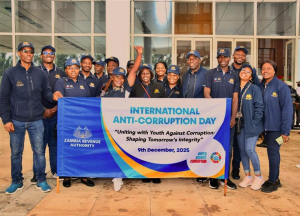
While significant progress has been made, the ZRA recognizes that building integrity is a continuous journey, and additional measures have been planned in response to the issues highlighted by the CIPS 2025 results and the corruption risk assessment. This requires continuous leadership commitment, the establishment of priorities aligned with strategic objectives, the development of key performance indicators (KPIs) and ongoing stakeholder consultation.
The 2026 Integrity Action Plan includes actions and sub-actions from the previous plan that were not implemented, as well as new measures. It also focuses on performance measurement, with all strategic and operational units and offices now required regularly to conduct corruption risk assessments and apply developed key performance indicators.
As reforms continue, the ZRA’s experience sends a clear message: when integrity is embedded in systems, processes and organizational culture, reforms become sustainable, measurable and transformative.
More information
zraic@zra.org.zm
[1] The Zambia Bribe Payers Index (ZBPI) is a corruption measurement tool that measures the probability of public service seekers experiencing bribe-seeking behaviour by public officials in any Zambian public-sector institution.
[2] https://acc.gov.zm/wp-content/uploads/2024/05/National-Anti-Corruption-Policy-1.pdf
[3] See WCO News No. 83: https://mag.wcoomd.org/magazine/wco-news-83/wco-mercator-programme.
[4] The Guide to Corruption Risk Mapping is based on information collated from WCO Members, academia and international institutions and is intended to provide WCO Members with general guidance for conducting a risk-mapping exercise as a tool to combat corruption.