Waste trafficking typologies and enforcement challenges
Article 9 of the Basel Convention defines the scenarios in which any transboundary movement of waste is deemed illegal traffic. Customs controls focus on verifying the legality of commercial shipments and detecting smuggled goods. Commonly observed methods used by traffickers include:
Several challenges have been identified by enforcement authorities:
WCO Operation DEMETER
To strengthen Customs capacities, enhance collaboration at national and international levels and collect more data on seizures in order to obtain a clearer picture of illicit international waste flows, the WCO has been organizing Operation DEMETER since 2009.
To date, 11 iterations of Operation DEMETER have taken place, with substances controlled under the Montreal Protocol on Substances that Deplete the Ozone Layer having been added to the list of targeted commodities in 2019. China Customs has played an instrumental role in the organization of each operation, from funding critical capacity-building activities to providing consistent operational support.
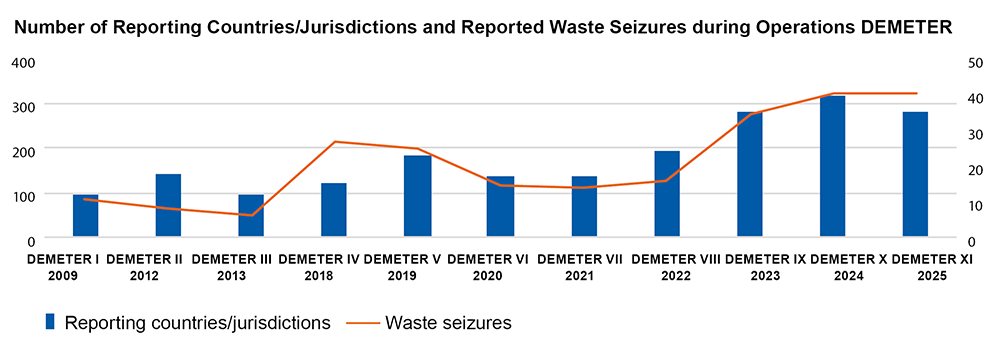
Although the number of participating administrations has varied from one iteration to another, the ratio of seizures to administrations has grown steadily (see graph below). In total, participants have seized 535.2 million kg and 2 million individual items of waste.
As part of the preparation for the operations, guidance documents on developing risk profiles have been produced and training has been provided to Customs officers and, where possible, to officials from national environmental agencies. Some national environmental agencies also play a crucial role during operations. Members of the European Union Network for the Implementation and Enforcement of Environmental Law (IMPEL) supported their Customs counterparts at the borders. Environment and Climate Change Canada took joint action with the Canada Border Services Agency, and various national environmental agencies from countries such as Gambia provided critical support to Customs.
This strategy has been paying off. Between Operation DEMETER VIII in 2022 and Operation DEMETER XI in 2025, the total number of reported seizures surged by 194.2%, although the number of reporting administrations increased by only 44.4%, a clear indicator of both stronger engagement and more strategic enforcement.
Belgium
Belgium Customs has participated in all iterations of Operation DEMETER and is convinced that, if all enforcement partners involved in this initiative continue to work together to improve their inspection capacity, the number of relevant inspections will continue to increase.
Within the Administration, various services are involved in matters related to waste:
Participation in the DEMETER operations has enabled the Administration to enhance its targeting capacities by analysing alerts and information exchanged among participants concerning shipments that have been identified as presenting a risk or that have been held or seized. Information relating to inspection results is particularly useful when sufficiently detailed. With this in mind, Belgium Customs provides detailed data during operations and systematically submits seizure reports to the WCO Customs Enforcement Network (CEN) database outside the operational framework.
An important development was the signing of a cooperation agreement on 13 July 2021 between the Belgian Federal State and the three Belgian regions – the Flemish Region, the Walloon Region and the Brussels-Capital Region – which have full authority over waste policy, regarding cross-border shipments of waste.
The agreement aims to coordinate policy on the import, export and transit of waste in Belgium, taking into account the responsibilities of the Federal State (Customs, Justice and Police) and the regions (inspection services and competent administrations). The cooperation agreement specifically defines the roles of all actors and authorities involved, methods for exchanging information, formal cooperation with third parties, financial guarantees and administrative costs, as well as the creation of a policy control coordination group.
All relevant enforcement partners involved in supervising and controlling waste shipments, including Customs, are represented in the coordination group, which meets regularly to discuss key operational matters such as:
These discussions have proved useful in improving the preparation and conduct of inspections, with Customs inspectors and officials from the competent authorities working more closely together.
Gambia
In Gambia, Customs considers that illegal trade in waste is increasing due to the high profits it generates and the involvement of organized criminal groups.
The number of seizures has increased substantially in recent years due to:
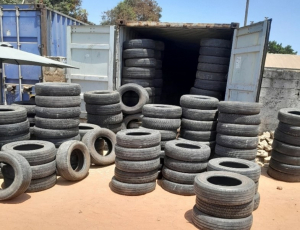
Although Gambia Customs has strengthened its capacities, challenges remain. While the WCO has provided guidance on developing risk profiles for plastic waste and e-waste, as well as training, staff rotation requires continuous capacity-building efforts. Training should therefore be organized regularly, with a focus on search techniques and investigation methods, including how to question suspects.
Another challenge is improving compliance among economic operators. Information on regulations and procedures is available on the Gambia Revenue Authority (GRA) website, and Customs officers working at help desks answer operators’ questions as well as provide them with flyers and brochures. However, heated debates have arisen over the definition of waste, with operators challenging Customs decisions to classify as waste materials that they consider to be intended for recycling or repurposing, or used equipment destined for legitimate repair, refurbishment, reuse or failure analysis.
Malaysia
In recent years, the number of seizures and repatriation procedures related to waste has increased in Malaysia. The illegal importation of e-waste became so alarming that the country banned e-waste imports in February 2026. Rather than indicating only a surge in criminal activity, this trend also reflects improved detection capacity resulting from advances in risk profiling, intelligence sharing and engagement with the private sector.
Capacity-building initiatives led by the WCO and partner organizations have significantly enhanced Customs officers’ technical knowledge and improved risk-profiling methodologies, including the analysis of seizure data reported to the CEN database and open-source data.
Cooperation has increased with environmental protection authorities, licensing and regulatory bodies, port and maritime agencies, and other law enforcement units such as the newly created Malaysian Border Control and Protection Agency. Roles and responsibilities have been clearly defined, formal cooperation frameworks established and communication channels set up, enabling inspections to be carried out jointly. Joint operations are also conducted, with one recent operation leading to the dismantling of a network involved in the illegal importation of controlled substances.
Inter-agency coordination has also been strengthened through the creation by the government of the Multi-Agency Task Force (MATF), spearheaded by the Malaysian Anti-Corruption Commission (MACC), with the objective of ensuring a coordinated approach to tackling corruption and financial crime, focusing particularly on dismantling complex criminal networks across various sectors. The MATF brings together key government agencies to coordinate investigations, legal action and asset recovery. These include the Attorney General’s Chambers, the Royal Malaysian Police, the Inland Revenue Board, the Royal Malaysian Customs Department, the Ministry of Finance and the Malaysian Border Control and Protection Agency. MACC investigations led to the freezing of over 1 million Malaysian ringgit in bank accounts and cash linked to illegal e-waste disposal and implicated high-level officials.
Royal Malaysian Customs Department (RMCD), together with the Department of Environment (DOE) has engaged with waste management companies to improve compliance and with logistics providers and shipping lines to facilitate swift communication regarding shipments identified as potentially infringing the law. Results have shown improved awareness and increased compliance, with some operators expressing support for stronger enforcement to ensure a level playing field. Challenges nevertheless persist, including varying levels of understanding of regulations. The private sector generally values clearer and more accessible information on regulatory requirements. Stakeholders also emphasize the need for simplified procedures, better guidance on classification and documentation and more consistent enforcement practices.
Efforts have also been made to raise public awareness of the environmental and health risks associated with illegal trade through press conferences, workshops and seminars.
To strengthen Customs enforcement capacities further, the following measures are being considered:
Indonesia
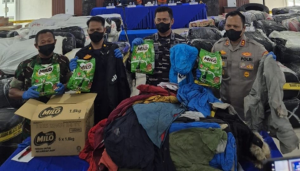
In Indonesia, lessons learned have also underscored the importance of establishing a centralized coordination mechanism to ensure more effective and streamlined enforcement. The fight against environmental crime linked to international trade is overseen by the Customs Enforcement Unit, which acts in close cooperation with the Ministry of the Environment as the lead agency on environmental matters, the Indonesian National Police (POLRI) and the Attorney General’s Office.
In collaboration with the Ministry of Environment, Indonesia Customs has established a Memorandum of Understanding (MoU) to strengthen synergy in the supervision of import and export commodities related to environmental protection.
Customs officers have at their disposal non-intrusive inspection equipment (X-ray scanners), laboratories, data analysis tools and seizure reports. Since 2022, they have participated in Operation DEMETER, the preparation phase of which includes training and the review of risk profiles.
Data on waste seizures by Indonesia Customs show an increasing share of e-waste in the volume of intercepted waste, with as many as eight e-waste cases reported during the five weeks of Operation DEMETER XI. The cases were developed through post-seizure analysis.
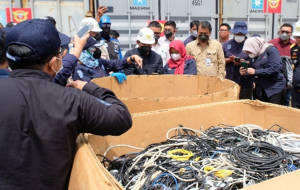
There has also been a shift from homogeneous cargo to mixed cargo, involving hazardous waste blended with recyclable materials, which challenges Customs’ technical capacity to identify illicit cargo. Smuggling methods have also become more sophisticated, with an increasing number of cases involving falsified documents and the deliberate use of incorrect but plausible HS codes. Trade routes have likewise diversified and become more complex, with countries of departure spread across East Asia, North America and Europe.
Another challenge lies in the complexity of repatriation procedures to the country of origin of the sender of illegal goods. As a result, such goods often have to be destroyed in Indonesia, which in turn creates additional impacts, including financial costs, time constraints, and the risk of illegal disposal into the environment. Through increasingly strengthened and refined regulations, Indonesia Customs, together with relevant government agencies, has established provisions requiring import suppliers from the country of origin to assume responsibility and to take back any waste they have shipped if violations are found in the imported goods.
There is also inconsistency in coordination among the various actors involved at port level. Corruption is another risk that can arise at different stages of the waste management chain, even before transactions take place, for example in the obtaining of permits or licences.
The final challenge concerns the availability of information, particularly regarding regulatory changes, with some operators complaining that they do not receive adequate and timely information to support compliance with applicable regulations. Indonesia Customs is committed to providing such information through its information offices and digital platforms.
[1] Basel Convention on the Control of Transboundary Movements of Hazardous Wastes and their Disposal.